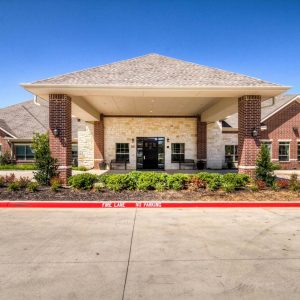
When a parent or spouse with Alzheimer’s needs more support than family can provide, the first question most Burleson families ask is what care will cost. The next concern follows close behind: choosing the right setting. For families in Burleson, Crowley, Joshua, and south Fort Worth, the answer depends on more than a monthly rate.
Texas families carry much of this responsibility. According to the Texas State Plan for Alzheimer’s Disease 2024-2028, roughly 460,000 Texans age 65 and older were living with Alzheimer’s in 2020, and about 1 million unpaid caregivers supported Texans with the disease in 2023. Nationally, the Alzheimer’s Association estimates the lifetime cost of care for a person living with dementia at $405,262, with 70% of that cost carried by families.
Understanding Alzheimer’s care costs in Texas starts with a clear comparison of memory care and nursing home care: what each charges, what the rate includes, where added costs appear, and which setting best fits a loved one’s needs.
The Alzheimer’s Care Cost in Texas by Care Setting
Texas is one of the more affordable states for long-term care. Statewide medians offer a useful starting point, though monthly prices in the Fort Worth area and in individual communities will vary.
| Memory care | $6,673 | A Place for Mom, 2026 report |
| Assisted living | $5,666 | CareScout, 2025 survey |
| Nursing home, semi-private room | $5,627 | CareScout, 2025 survey |
| Nursing home, private room | $7,604 | CareScout, 2025 survey |
*The nursing home and assisted living figures come from the CareScout Cost of Care Survey 2025. CareScout does not track memory care as a separate category, so the memory care figure comes from A Place for Mom’s senior living cost data, which is based on family move-ins. The two sources use different methods, so the numbers work best as a general comparison.
Why the Numbers Look Closer in Texas
National reports often show memory care costing far less than a nursing home. Nationally, CareScout places a semi-private nursing home room at $9,581 a month and a private room at $10,798. In Texas, the gap narrows considerably. A semi-private nursing home room here costs about the same as assisted living, while a private nursing home room costs more than the median for memory care.
For Texas families, fit, room type, and payment source tend to shape the decision most.
Memory Care vs. Nursing Home Cost: What Drives Each Price
Both settings price their services around the level of support a resident needs, though the factors behind each rate differ.
What Affects Memory Care Pricing
- Apartment type, such as a private room or a shared companion suite
- The level of personal care a resident needs each day
- Secure neighborhood design that supports residents who wander
- Dementia-specific training for every caregiver
- Daily programming designed around memory loss
- Location and local labor costs
What Affects Nursing Home Pricing
- Semi-private or private room
- Around-the-clock licensed nursing coverage
- Skilled medical services, such as wound care, IV therapy, or feeding tube support
- Rehabilitation therapy after a hospital stay
- Whether Medicare, Medicaid, or private funds are covering the stay
What the Monthly Rate Usually Covers
Comparing two monthly rates only works when families know what each includes.
Typically Included in Memory Care
- A private or shared apartment within a secure neighborhood
- Three meals a day with snacks and hydration
- Help with bathing, dressing, grooming, and other daily routines
- Medication management
- Housekeeping and laundry
- Daily activities designed for people living with dementia
Typically Included in a Nursing Home
According to Texas Health and Human Services, Texas Medicaid covers nursing home care, including room and board, social services, medical supplies and equipment, rehabilitative services, personal needs items, and medications not covered by Medicare Part B or D. Residents also receive 24-hour licensed nursing oversight.
Where Families See Hidden or Added Costs
The base rate rarely tells the full story. Before signing an agreement with any community or nursing home, families should ask for a written list of fees.
In memory care, added costs may include:
- Higher care-level fees as needs increase over time
- One-time community or move-in fees
- Incontinence supplies
- Pharmacy copays and insurance premiums
- Salon services and personal items
- Transportation outside of scheduled trips
In a nursing home, added costs may include:
- The difference between a semi-private and private room
- Daily Medicare coinsurance after the first 20 days of a covered stay
- Full private-pay rates once Medicare coverage ends
- Personal phone, cable, or salon charges
- Therapy or services that insurance stops covering
Asking every community the same questions makes the comparison fair and keeps surprises off the monthly statement.
How Payment Sources Change the Math
Who pays often matters as much as the rate, and coverage works differently in each setting.
Medicare covers up to 100 days of skilled nursing care in a nursing home per benefit period after a qualifying inpatient hospital stay of at least three days. Medicare covers days one to 20 in full, and days 21 to 100 require a daily coinsurance payment. Medicare does not cover long-term custodial care, which includes most ongoing Alzheimer’s care in either setting.
Texas Medicaid works differently for each setting. For eligible residents, Medicaid nursing home coverage includes room and board. In assisted living and memory care, the STAR+PLUS Home and Community-Based Services program can help pay for care services in participating communities. However, members remain responsible for their own room-and-board costs.
Many Burleson families pay for memory care through savings, retirement income, long-term care insurance, or the sale of a house. Wartime veterans and surviving spouses may qualify for the VA Aid and Attendance benefit. The Elk Creek team outlines these options on the How to Pay for Senior Living in Burleson page.
Staffing, Programming, and Daily Structure Compared
Cost is one part of the decision. How care feels from morning to night is another.
Who Provides the Care
Nursing homes build their teams around licensed nurses and medical oversight, which serves residents with complex health conditions well. Dementia training varies from one nursing home to the next.
Memory care teams center on caregivers trained specifically in dementia. Consistency matters for people living with memory loss, since a familiar face can ease anxiety. The Alzheimer’s Association estimates annual turnover at 99% for nursing assistants in nursing homes, so families comparing options in either setting should ask how long caregivers typically stay.
How Days Are Organized
In a nursing home, the day often follows a clinical schedule of medications, treatments, and therapy. In memory care, the day follows predictable routines designed to reduce confusion, with meals, activities, and rest at consistent times. That rhythm helps many residents feel more settled.
Programming Built Around Dementia
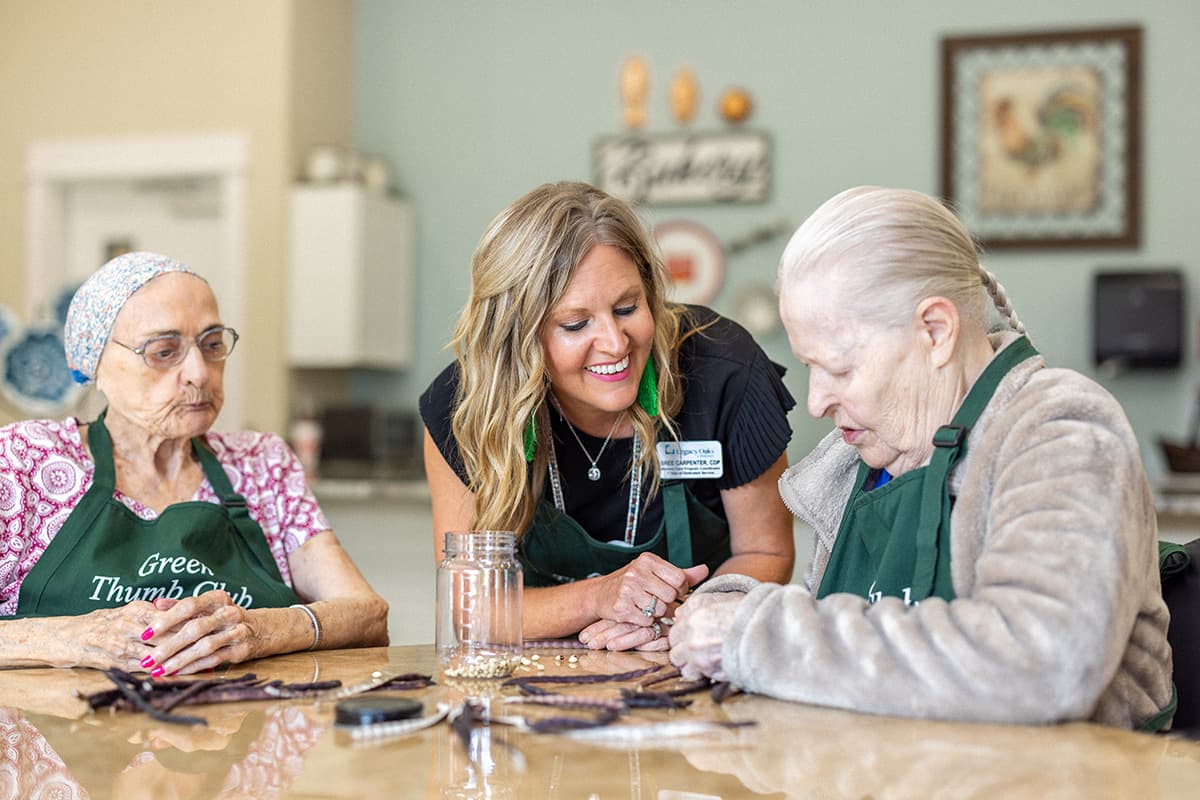
Memory care programming adapts to each resident’s abilities and life story. Music, reminiscence, sensory activities, and purposeful tasks like folding laundry or helping in the kitchen give residents chances to connect and feel useful. Many nursing homes also offer activities, and families can ask how much of that programming is designed for dementia.
When Each Option Tends to Be the Better Fit
Every family’s situation is different, and a loved one’s physician can help guide the decision.
Memory Care Often Fits When
- A loved one is mobile and may wander
- Behavioral changes like agitation or sundowning need trained support
- Daily needs center on personal care and supervision
- Purposeful activities and a predictable routine would improve quality of life
- Family wants a consistent team that learns a loved one’s history and preferences
A Nursing Home Often Fits When
- A loved one needs daily skilled nursing, such as wound care, IV therapy, or feeding tube support
- Rehabilitation is needed after a hospital stay
- Several serious medical conditions require ongoing clinical management
- Limited assets make Texas Medicaid nursing home coverage the most realistic option
Comparing Options Close to Burleson
Many families in Burleson moved here decades ago when I-35W made the Fort Worth commute manageable. Keeping a parent close to familiar streets, a longtime church, and the Saturday farmers market can matter just as much as the rate. When visiting communities in Burleson and south Fort Worth, families can ask about a few key details:
- What the starting rate includes and which services cost extra
- How care levels are assessed and how often they change
- The dementia training every caregiver completes
- How the team responds to wandering and sundowning
- Medical support available on-site
- The drive to Fort Worth hospitals and specialists along I-35W