
The World Health Organization reports that approximately 92% of adults aged 65 and up wear glasses. Yet spectacles, contact lenses, or having cataract surgery don’t always eliminate their struggles with reading. For seniors, difficulties interpreting words in or on texts, books, pill bottles, food containers, and other sources can still be challenging.
These daily stressors signal a common problem that affects countless older adults. At Elk Creek Assisted Living and Memory Care, our caregivers know how clear vision and comfortable reading directly impact senior health, independence, and quality of life.
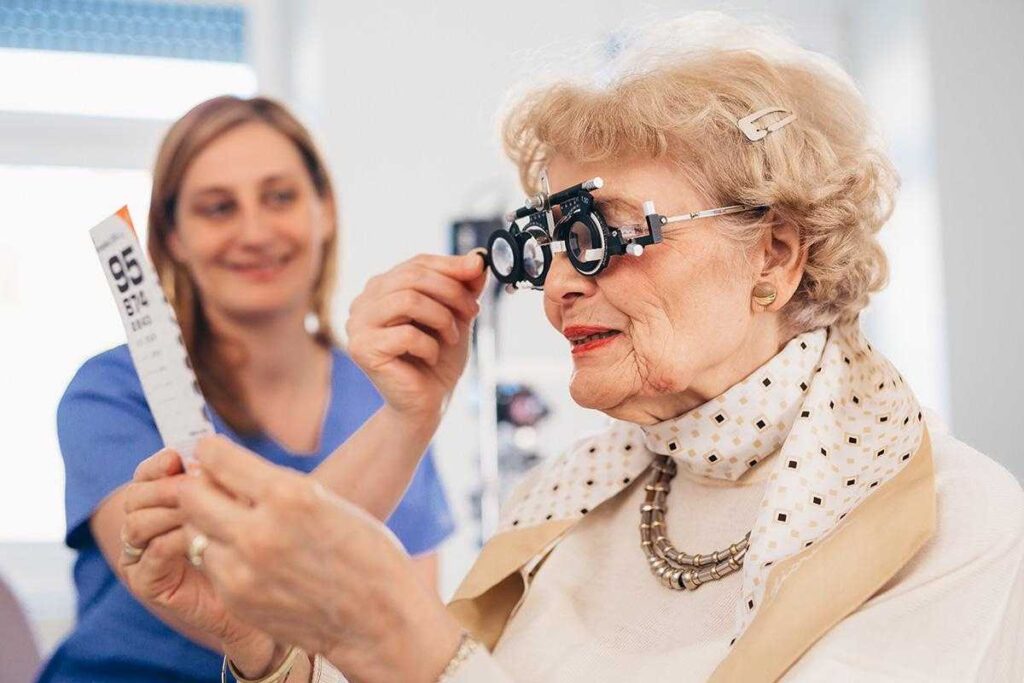
That’s why we advocate for breaking down those barriers.
Why Clear Reading Matters for Senior Daily Living
Reading ability is a foundation for maintaining independence in later years. Your loved one needs to read medication labels accurately to avoid dangerous dosing errors; what if they’re diabetic and mistakenly eat an entire box of sugary cookies? Besides that, understanding bills, insurance documents, and medical instructions prevents costly mistakes and health complications.
Beyond practical necessities, reading provides mental stimulation that keeps cognitive functions sharp. Studies show that regular reading reduces the risk of dementia and depression and maintains social connections through books, newspapers, and digital communication.
But no one wants to read if they can’t understand what they see, or if it hurts their eyes.
Common Barriers Affecting Reading for the Elderly
Age-related vision changes create multiple obstacles that make reading frustrating or impossible:
- Presbyopia reduces the eye’s ability to focus on close objects, forcing seniors to hold materials farther away.
- Cataracts cloud the lens, creating glare sensitivity and reduced contrast perception.
- Macular degeneration affects central vision, making it difficult to see fine details in text.
- Diabetic retinopathy can cause blurred or distorted vision that fluctuates throughout the day.
These conditions often develop gradually, so seniors may not realize how much their reading ability has declined. Other health issues can compound vision problems: Arthritis makes holding books painful, while tremors can make turning pages difficult. And if a reading is affected if a vision prescription is off, even by just a bit.
Thankfully, the Elk Creek’s team members use different strategies that improve reading for seniors.
How to Make Reading Easier with Better Lighting
Proper illumination makes a huge difference in reading comfort for seniors, so position a bright, focused light source directly over the reading material to eliminate shadows. We like LED desk lamps with adjustable arms, which provide concentrated light without heat buildup.
Natural light works best during daytime hours, but avoid direct sunlight that creates glare; place reading chairs near windows with sheer curtains to diffuse harsh rays. Consider the color temperature of light bulbs, as cooler white light (5000K-6500K) offers better contrast than warm yellow bulbs and makes it easier to read. Task lighting should be three times brighter than ambient room lighting for optimal reading conditions.
Clever, Effective Senior Reading Tools
Magnification devices significantly improve text visibility for those with vision challenges, as do other simple tools:
- Handheld magnifying glasses work well for short reading tasks like medicine labels or price tags.
- Illuminated magnifiers combine light and magnification in one convenient tool.
- Electronic magnifiers offer variable zoom levels and high contrast settings that make text easier to read. These devices can display text on larger screens with customizable colors and fonts. Some models include speech output for severely impaired vision.
- Book holders and reading stands also make it easier to read things; they reduce neck strain by positioning materials at comfortable angles.
- Weighted page holders keep books open without requiring constant hand pressure.
- Large-button remote controls help seniors adjust electronic reading devices independently.
Next, we explore the digital landscape of reading.
How to Make Text Easier to Read
Ever notice how some fonts are easier to read than others? Ones like Arial or Verdana provide cleaner letter shapes than decorative typefaces, so choose wisely when emailing senior family members. And increase font size to at least 14 points for comfortable reading; 16-18 points is ideal for many older adults.
High contrast between text and background reduces eye strain significantly. Black text on white paper provides the strongest contrast, while yellow or blue backgrounds can reduce glare for some readers. Avoid reading materials with busy patterns or watermarks that interfere with text clarity.
Line spacing and margins also affect reading comprehension and comfort. Double-spaced text prevents lines from appearing to run together; wide margins provide visual rest areas and make it easier to track reading progress across the page.
How to Make Articles Easier to Read Through Technology
Digital reading devices offer customization options that traditional books cannot match. E-readers let users adjust font size (see above), line spacing, and background colors instantly. Many devices include built-in dictionaries and text-to-speech capabilities.
Tablets provide even more flexibility, with reading apps designed specifically for seniors. These applications can convert printed text to speech, highlight words as they’re read aloud, and sync reading progress across multiple devices.
Voice-controlled smart speakers can read news articles, books, and messages aloud. This technology helps seniors stay informed and entertained even when vision problems make traditional reading impossible.
Creating Comfortable Reading Environments
How else can you make it easier to read? Up the coziness factor, because physical comfort enhances reading enjoyment and reduces fatigue. Choose chairs with good back support and armrests positioned at comfortable heights for holding books, and add a footrest to support proper posture during extended reading sessions.
Room temperature affects concentration and comfort; keep reading areas slightly cool, as warm environments can cause drowsiness. Finally, minimize distractions by creating quiet reading spaces away from television noise or high-traffic areas.
The Best Senior Reading Tool: Communication
Is your Mom or Dad constantly squinting or complaining of headaches? They might need an updated prescription for glasses. Regular eye examinations identify vision changes and conditions like glaucoma. Schedule annual appointments with ophthalmologists who specialize in age-related eye conditions, and discuss any reading difficulties promptly.
Reading for seniors becomes more enjoyable with proper support and adaptive tools. Start with small improvements like better lighting or larger print materials before investing in expensive magnification equipment. Many libraries offer large-print books and audiobook collections specifically for older adults.
Encourage your loved one to continue reading despite challenges. This vital activity supports cognitive health, emotional well-being, and social connections that contribute to successful aging.
Experience Compassionate Care That Supports Your Loved One’s Independence
The team at Elk Creek knows that maintaining cherished activities like reading contributes to your family member’s happiness and dignity. Our interior spaces feature optimal lighting and comfortable seating areas that make reading enjoyable. Schedule a tour and see how your loved one can continue pursuing the activities they treasure most.