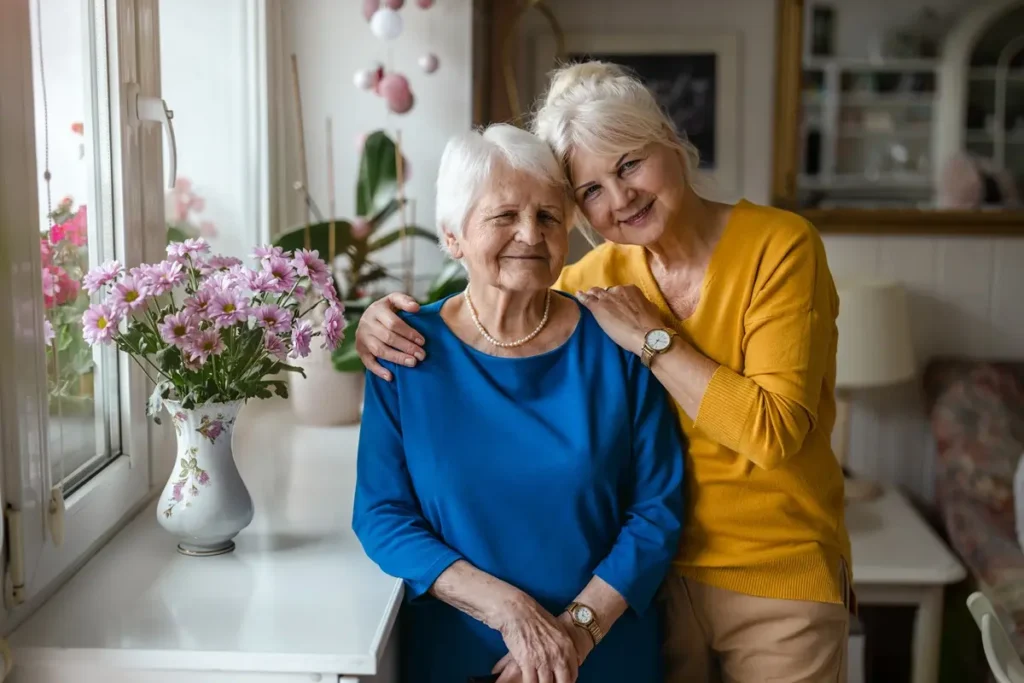
A dementia diagnosis changes daily life for an entire family, not only for the person who receives it. As the disease progresses, spouses, adult children, and other relatives often take on caregiving responsibilities they never expected to carry. Dementia support groups exist for exactly this reason: to give people living with dementia and the people caring for them a place to find information, peer support, and company from others who understand what they are facing.
For families in the greater Fort Worth area, including Aledo, Willow Park, and Weatherford, dementia support groups are becoming an important part of the care picture alongside medical treatment and, eventually, memory care.
What Dementia Support Groups Look Like
Dementia support groups Fort Worth-area residents attend take several different forms, and the right fit often depends on schedule, comfort level, and where someone is in the caregiving process.
In-Person and Online Options
Most Fort Worth-area dementia support groups meet face-to-face, often hosted by hospitals, area agencies on aging, or senior living communities such as Harvest of Aledo Senior Living. In-person groups allow participants to build real relationships with people nearby who are managing the same circumstances.
Online and telephone-based groups have grown alongside these in-person options, giving caregivers who cannot leave a loved one unattended, or who live farther from a meeting location, a way to participate from a computer or phone. Research on technology-based caregiver support groups has found they can meaningfully reduce caregiving burden while remaining low-cost and low-risk to join.
Caregiver-Only vs. Mixed Groups
Some groups are designed exclusively for caregivers, giving spouses, adult children, and other family members a place to speak candidly without a loved one present. Others are mixed groups in which the person with dementia and their caregiver attend together, often in early-stage programs focused on continued independence. Choosing between the two often comes down to the stage of the diagnosis and what each family member needs most at that point.
How Support Groups Help Caregivers and Family Members
Caregiving for someone with dementia is demanding work, and the numbers reflect it. According to the Alzheimer’s Association, nearly 12 million Americans provide unpaid care for people with Alzheimer’s or another dementia, and 40% of these caregivers report clinical depression or high stress tied directly to caregiving demands.
Alzheimer’s and dementia support groups address this strain in a few concrete ways.
- Reducing isolation. Caregiving often narrows a person’s social world considerably. A regular group meeting reconnects caregivers to other adults facing comparable circumstances.
- Preventing burnout. Naming caregiving exhaustion out loud, and hearing others describe it too, helps caregivers recognize burnout before it becomes a crisis.
- Sharing practical coping strategies. Experienced caregivers pass along approaches for handling wandering, repeated questions, or resistance to bathing that a textbook rarely covers.
- Processing grief and role reversal. Watching a parent or spouse change is its own form of loss, even while that person is still living. Support groups make room for caregivers to acknowledge this grief without guilt, and to work through the change from spouse or child into caregiver.
Multiple peer-reviewed studies back this up. A mixed-method study on dementia caregivers found a statistically notable decrease in total, social, and emotional caregiver burden after a support group intervention, and a broader meta-analysis concluded that support groups produce measurable improvements in caregiver well-being, depression, and social outcomes.
How Support Groups Help People Living With Dementia
People in the earlier stages of dementia benefit from support groups as well. A group setting designed for people with a diagnosis, rather than for caregivers, offers a chance to stay socially active, hear how others approach daily challenges, and feel less alone in a diagnosis that can otherwise feel isolating.
For someone processing a new diagnosis, hearing from others managing the same symptoms can ease some of the fear surrounding what comes next, without minimizing the seriousness of the condition.
Finding Support Close By in Aledo
Families searching for dementia support groups near Fort Worth do not need to look outside the area. Harvest of Aledo Senior Living hosts a quarterly Dementia and Memory Care Support Group, featuring a clinician from Community Healthcare of Texas to lead an educational session and an open discussion for families navigating the realities of memory loss.
Beyond the support group itself, Harvest of Aledo offers families a full continuum of care on one campus in Aledo, spanning independent living, assisted living, and memory care. This matters to families who want to plan rather than search for a new community whenever a loved one’s needs change. The memory care team includes Certified Dementia Practitioners, and Harvest of Aledo is recognized as a Certified Age-Friendly and Dementia-Friendly Business.
For a family in Aledo balancing a demanding job, kids at Aledo ISD, and a parent who is beginning to need more supervision, these details add up to fewer moves and fewer difficult conversations down the road. Housing, daily activities, and day-to-day quality of life all factor into that decision, and a community built around the specific needs of dementia families can lighten a load that would otherwise fall entirely on a single household.