Sitting across from someone you love, you ask if they remember what they ate for lunch. They hesitate, then shift the conversation to a vivid story about childhood or their wedding day. It is detailed and joyful. But the moment you bring up something that happened this morning, the expression turns blank.
If you’ve experienced this with a parent or loved one, you’re not alone.
This is a common and often emotional part of caring for a person with dementia. While short-term memories fade, distant memories often remain intact. The reasons behind this are medical, but the emotional impact is personal.
At Clear Fork of Willow Park in Willow Park, TX, we understand the significance of honoring each resident’s personal story. Our assisted living community (with our memory care area called The Cottage), recognizes that connecting with the past brings comfort, dignity, and joy.
Let’s explore why people with dementia remember the past and how you can use this knowledge to support your loved one.
Remembering the Past with Dementia
To understand dementia and remembering the past, we need to consider how the brain stores memory:
- The hippocampus and surrounding temporal lobe areas play key roles in creating new memories.
- As dementia progresses, especially in Alzheimer’s, these areas are often the first to become damaged.
- This damage limits a person’s ability to form new memories.
However, older memories are stored in different areas of the brain that may remain unaffected longer. That’s why people with dementia experience memory loss about recent events but can recall memories from decades ago.
This phenomenon is called past reality in dementia. These memories feel real to the person who is experiencing them, and it’s often comforting for them to revisit those times.
What Is Past Reality in Dementia?
Past reality in dementia refers to a person’s belief that they are living in a time from their past. It may seem like confusion, but to them, it feels real. A person with dementia might believe they still work, are looking for their spouse, or are preparing to pick up children from school.
These episodes are common as dementia progresses and are influenced by:
- Time of day (sundowning can make symptoms more intense)
- Changes in environment
- Emotional triggers like photos or music
- Familiar routines or voices
Understanding this concept helps caregivers and family members offer more compassionate responses. Instead of correcting them, it’s often best to join their reality and gently redirect if needed.
Why Do People With Dementia Remember the Past Better Than the Present?
The brain stores long-term memories differently from short-term ones. As dementia affects areas responsible for recent memory, past memories may still be accessible.
Family members often ask, “Why can Dad remember his army days but not that I visited yesterday?” The answer is in the brain’s wiring.
The damage caused by dementia makes it difficult to store or retrieve recent information. However, deeply emotional or routine past memories remain strong because they were reinforced over time.
This connection to the past can bring positive emotional responses, even when other parts of daily life become difficult.
How to Support a Loved One Living in the Past
Supporting a person with dementia who lives in the past can be challenging, but there are effective and kind ways to help.
Here are practical tips:
- Listen Without Correcting: Allow them to tell their story without challenging the timeline.
- Validate Feelings: Acknowledge the emotion, even if the memory is from long ago.
- Use Familiar Cues: Music, photos, and smells can help them recall memories and feel at ease.
- Redirect Gently: If a topic causes distress, shift the conversation without forcing change.
- Remain Calm: Your calm tone helps ease anxiety or agitation.
- Create Routine: Structure supports cognitive function and mental health.
Remember, for a person with dementia, the past may feel safer than the present.
Why Memory Matters in Daily Life
Though recent events may be lost, the ability to recall memories can still shape daily life. People with Alzheimer’s and other types of dementia often thrive when care teams and family members understand their life history. This approach leads to better engagement, increased cooperation, and improved emotional well-being.
Using past reality to build a stronger connection is not only comforting but also effective. A person who recalls baking with their mother may respond positively to a baking activity today.
Honoring the Past at Clear Fork of Willow Park
At Clear Fork of Willow Park, we celebrate the lives of our residents. Within our memory care program, The Cottage, our team designs daily life around familiar tasks, music, and traditions. These practices are based on knowing each person’s story.
Our memory care includes:
- Memory stations that reflect hobbies or careers
- In the Kitchen, baking sessions that recall family recipes
- Mocktail social hours that promote routine and joy
- Spa days to nurture comfort and dignity
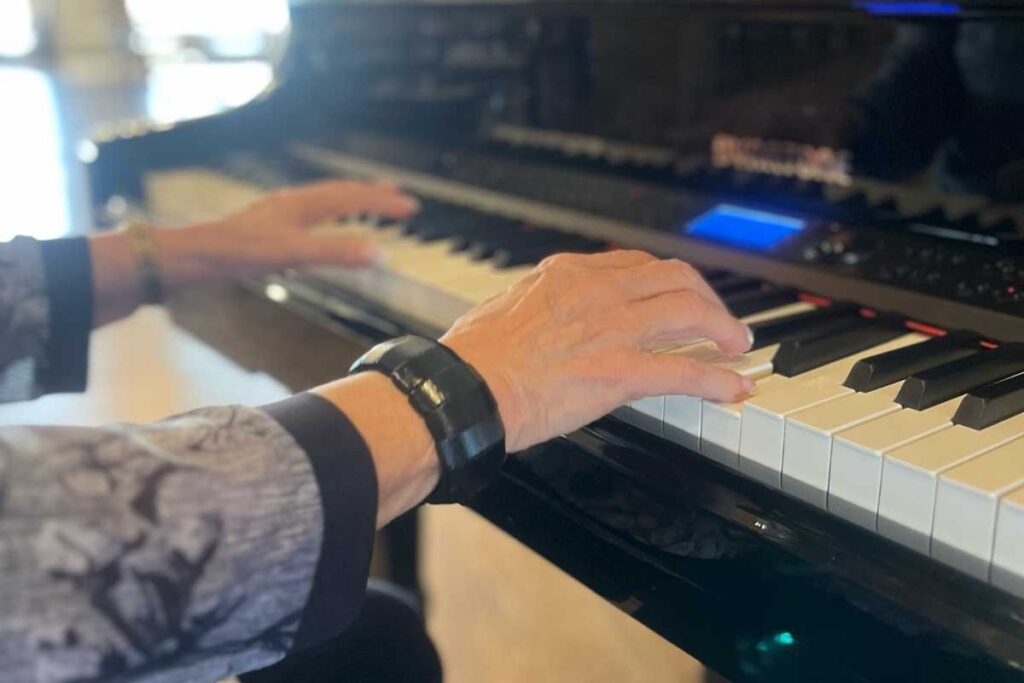
- Live music that brings back special moments
- Baby doll therapy to encourage nurturing and purpose
These activities are powerful tools for connection with each other and purpose within themselves.
The My Legacy Program: Celebrating Each Story
Our My Legacy program is part of our larger Passion Program, designed to honor each resident’s story. Through legacy books, shared family traditions, and meaningful milestones, we help residents feel seen and valued.
Understanding the link between dementia and past reality helps us provide more personalized care.
A Miracle Moment Worth Dancing For
At Clear Fork of Willow Park, we don’t just talk about honoring memories — we live it. One of our residents spent his life dancing. When our team learned about his love for movement and Latin music, we created a Miracle Moment just for him.
The event featured performances by Salsa at the Garden and Dancing with Jo. It was hosted at Garcia’s Latin Cuisine in North Richland Hills, and the community came out to cheer him on.
Miracle Moments are ways to honor the life of a loved one. We take time to celebrate their life accomplishments, milestones, and hobbies.
Why This Matters for Your Family
When a family member lives with dementia, the best support comes from understanding, patience, and shared moments. At Clear Fork of Willow Park, we honor the past not because we are stuck there, but because it’s the key to creating comfort in the present.
By embracing dementia and remembering the past, we turn what seems like memory loss into a bridge for meaningful care.
Whether your loved one is newly diagnosed or you are deep into the caregiving journey, we are here to simplify the journey. Memory care should be a space where each story is valued and every person is honored.
Simplify the Journey to Memory Care Near You
Contact our team in Willow Park, TX, today to learn more about arranging a visit, moving assistance, or financial guidance when paying for memory care.