When a loved one needs rehabilitation following surgery, illness, or injury, families face overwhelming choices. Many assume their only options are traditional nursing home rehab services or hospital-based programs.
What they don’t realize: senior living communities offer an often-overlooked alternative that combines therapeutic recovery with lifestyle support.
Approximately 5.6 million older adults in the United States complete rehabilitation episodes each year. These individuals recover in various settings, including inpatient facilities, skilled nursing environments, and home health programs. With 70 percent of hospitalized seniors aged 65 and older requiring post-treatment rehabilitation care, understanding your options becomes critical.
This guide clarifies the differences between skilled nursing and rehab, explains why seniors need these services, and reveals how communities like StoneCreek of Flying Horse Senior Living provide therapeutic recovery designed for living well, not just healing temporarily.
Understanding Skilled Nursing and Rehabilitation
The terms “skilled nursing” and “rehabilitation” are often used interchangeably, which can create confusion for families researching care options. While related, these services provide distinct purposes with different timeframes and goals.
What Is Rehabilitation?
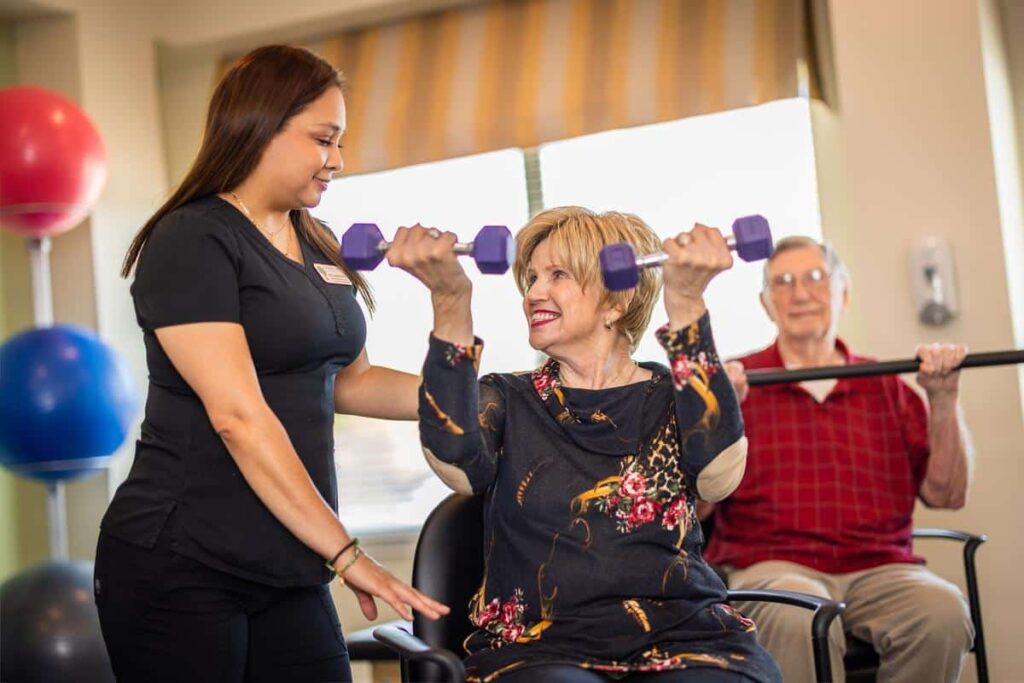
Rehab facilities provide short-term, intensive therapy following hospitalization. These programs help patients regain independence through structured therapeutic interventions. Rehabilitation focuses on specific recovery goals with measurable progress benchmarks.
Inpatient rehabilitation facilities treated approximately 363,000 Medicare beneficiaries in 2019, with numbers rising to about 120 stays per 10,000 beneficiaries by 2023 — exceeding pre-pandemic levels. This growth reflects both aging demographics and improved post-acute care protocols.
Rehabilitation typically includes:
- Physical therapy – rebuilding strength and mobility
- Occupational therapy – teaching daily living skills
- Speech therapy – addressing communication and swallowing
- Intensive therapy sessions multiple times daily
- Goal-oriented treatment with discharge planning
Most rehabilitation stays last two to six weeks, depending on recovery progress and insurance coverage. The objective is always to return to prior functioning levels or to achieve maximum possible independence.
What Is Skilled Nursing?
Skilled nursing and rehab overlap but aren’t identical. Skilled nursing refers to medical care that requires licensed professionals, such as registered nurses. This care level addresses complex medical needs beyond basic assistance.
In 2019, nearly two million older adults used rehabilitation services at skilled nursing rehab facility environments annually. These settings combine nursing supervision with therapeutic services, serving individuals who require both medical oversight and recovery support.
Skilled nursing services include:
- Wound care and infection management
- Intravenous medication administration
- Vital sign monitoring and medical oversight
- Assistance with daily activities
- Coordination with physicians
Skilled nursing can occur in various settings, not just residential facilities. Home health agencies provide professional nursing services, as do some senior living communities through on-site medical partnerships.
Common Reasons Seniors Need Rehabilitation Services
Understanding why older adults enter nursing home and rehab centers helps families recognize when these services become necessary.
Falls and Fractures
Falls represent the leading reason seniors require rehabilitation. One in four older adults experiences a fall every year, resulting in three million emergency room visits annually. These incidents aren’t just statistics. They’re life-changing events requiring intensive recovery.
Hip fractures particularly devastate older adults. Approximately 319,000 seniors are hospitalized for hip fractures each year. Recovery from hip fractures demands extensive physical therapy, often beginning in inpatient settings before transitioning to continued care.
Fall-related injuries don’t just affect mobility. They erode confidence, create fear of future falls, and often begin cycles of declining independence. Quality rehabilitation addresses both physical recovery and psychological impacts.
Post-Surgical Recovery
Surgical procedures, increasingly common among older adults, require structured rehabilitation. Joint replacements, cardiac surgeries, and orthopedic repairs all benefit from intensive therapy following hospital discharge.
Stroke Rehabilitation
Stroke recovery requires specialized therapy that addresses mobility, speech, and daily functioning. The first weeks and months post-stroke are critical for regaining abilities, making intensive rehabilitation essential.
Chronic Condition Management
Seniors with progressive conditions like Parkinson’s, COPD, or arthritis benefit from rehabilitation, helping maintain function and adapt to changing abilities. These ongoing needs differ from acute recovery but still require skilled therapeutic intervention.
General Deconditioning
Hospitalization itself causes weakness and functional decline, especially in older adults. Even seniors hospitalized for relatively minor issues often need rehabilitation addressing deconditioning before returning home independently.
Rehab vs. Skilled Nursing: Key Distinctions
Clarifying these differences helps families choose appropriate settings.
Intensity and Duration
Rehabilitation facilities provide intensive therapy multiple times daily for short-term stays. Skilled nursing facilities offer less intensive therapy over potentially longer periods, accommodating those who can’t tolerate rigorous schedules.
Medical Complexity
Skilled nursing and rehab facilities both provide medical oversight, but skilled nursing environments typically serve those with more complex medical needs requiring constant nursing attention beyond therapy requirements.
Insurance Coverage
Medicare covers up to 100 days in skilled nursing settings following three-day hospital stays when rehabilitation shows measurable progress. Coverage depends on meeting specific criteria and demonstrating ongoing improvement.
Environment and Atmosphere
Traditional nursing home rehab centers operate as medical facilities with institutional atmospheres. Recovery occurs in clinical settings designed for treatment rather than comfortable living.
Senior Living: The Alternative Families Hadn’t Considered
Here’s what many families may not realize: senior living communities are increasingly offering rehabilitation services through on-site partnerships, providing therapeutic recovery in lifestyle-focused surroundings.
Why Senior Living Changes the Recovery Equation
Traditional nursing and rehab settings focus exclusively on medical treatment. Once therapy sessions end, patients return to hospital-like rooms with limited social opportunities or engaging activities. This approach addresses physical recovery while neglecting emotional and social well-being.
Senior living communities with on-site rehabilitation partnerships offer different experiences:
- Therapeutic Services in Community Settings: Residents receive professional therapy in a non-institutional atmosphere. Private apartments, restaurant dining, and social programming continue during recovery periods in our community.
- Continuity Beyond Recovery: When rehabilitation ends, residents don’t face discharge to uncertain situations. They remain in communities where support, social connection, and care continue seamlessly.
- Family Involvement: Comfortable common areas and welcoming atmospheres make family visits enjoyable rather than clinical. Loved ones participate in recovery within communities designed for gathering, not just visiting.
- Holistic Recovery: Rehabilitation addresses physical needs while community life supports emotional and social well-being. Engagement with peers, participation in activities, and maintenance of dignity accelerate overall recovery.
Who Benefits from This Approach?
Senior living with on-site rehabilitation serves individuals who need intensive therapy but don’t require 24/7 nursing supervision for complex medical conditions. This includes those recovering from falls, joint replacements, strokes affecting mobility but not requiring feeding tubes or ventilators, and general deconditioning following hospitalization.
This option particularly benefits seniors who previously lived independently and need temporary rehabilitation before returning home, or those who recognize they’d benefit from ongoing community support even after therapy concludes.
Rehabilitation Services at StoneCreek of Flying Horse Senior Living
Our community has reimagined what recovery can look like by integrating professional rehabilitation with the lifestyle, dignity, and community connection seniors deserve.
On-Site Therapy Partnerships
We partner with rehabilitation providers offering comprehensive physical, occupational, and speech therapies. These professionals bring expertise in senior-specific recovery, understanding the unique needs of older adults.
Our on-site approach eliminates transportation challenges. Residents receive consistent, high-quality therapy without the burden of coordinating rides to external facilities. Family members rest assured knowing their loved ones have access to services steps from their apartments.
Medical Partnerships Supporting Recovery
Beyond therapy, we collaborate with on-site medical partners providing physician oversight, medication management, and coordination with specialists. This integration ensures comprehensive care that addresses all aspects of recovery.
Beyond Therapy: A Community That Heals
What truly distinguishes our approach is the community surrounding therapeutic services:
Private Apartments: Residents recover in comfortable, homelike spaces rather than hospital rooms. Personal belongings, familiar surroundings, and privacy support emotional well-being during physically challenging periods.
Nutritious Dining: Chef-prepared meals support healing through proper nutrition. Restaurant dining with peers maintains social connections, even during recovery.
Social Engagement: Participating in activities, attending entertainment, and building relationships with neighbors helps combat the isolation often associated with rehabilitation. This social support accelerates recovery.
Ongoing Support: After formal rehabilitation concludes, residents continue to benefit from fitness programming, balance classes, and wellness initiatives, helping them maintain the gains achieved during therapy. Care teams continue supporting independence through assistance with daily activities as needed.
Our Difference
At Civitas Senior Living communities, our values shape every aspect of care: Passionate Service, Passionate Cleanliness, Passionate Care. These principles guide interactions between residents, therapy providers, and care teams, ensuring personalized support throughout recovery. We work to simplify every aspect of the journey to senior living.