Please ensure Javascript is enabled for purposes of website accessibility

What Are Skilled Nursing Facilities (SNF) in Fort Worth, TX?

Table of Contents

When researching care options, many families assume “nursing home” and “skilled nursing facility” mean the same thing. Others confuse these medical facilities with senior living communities. Understanding these distinctions is crucial when selecting the right care for your loved one.

Here’s what creates confusion: nursing homes and skilled nursing facilities both provide medical care, but they serve different purposes with different lengths of stay and payment structures.

Neither represents the lifestyle-focused approach of senior living communities.

This guide clarifies the differences between a skilled nursing facility and a nursing home, including who lives in these environments, how costs compare, and when each option is most suitable.

At The Grandview of Chisholm Trail Senior Living, families often ask us about these differences as they explore care options, and we’re happy to provide clarity during this important decision. We’re here to simplify the journey to senior care.
What Are Skilled Nursing Facilities (SNF) in Fort Worth, TX?
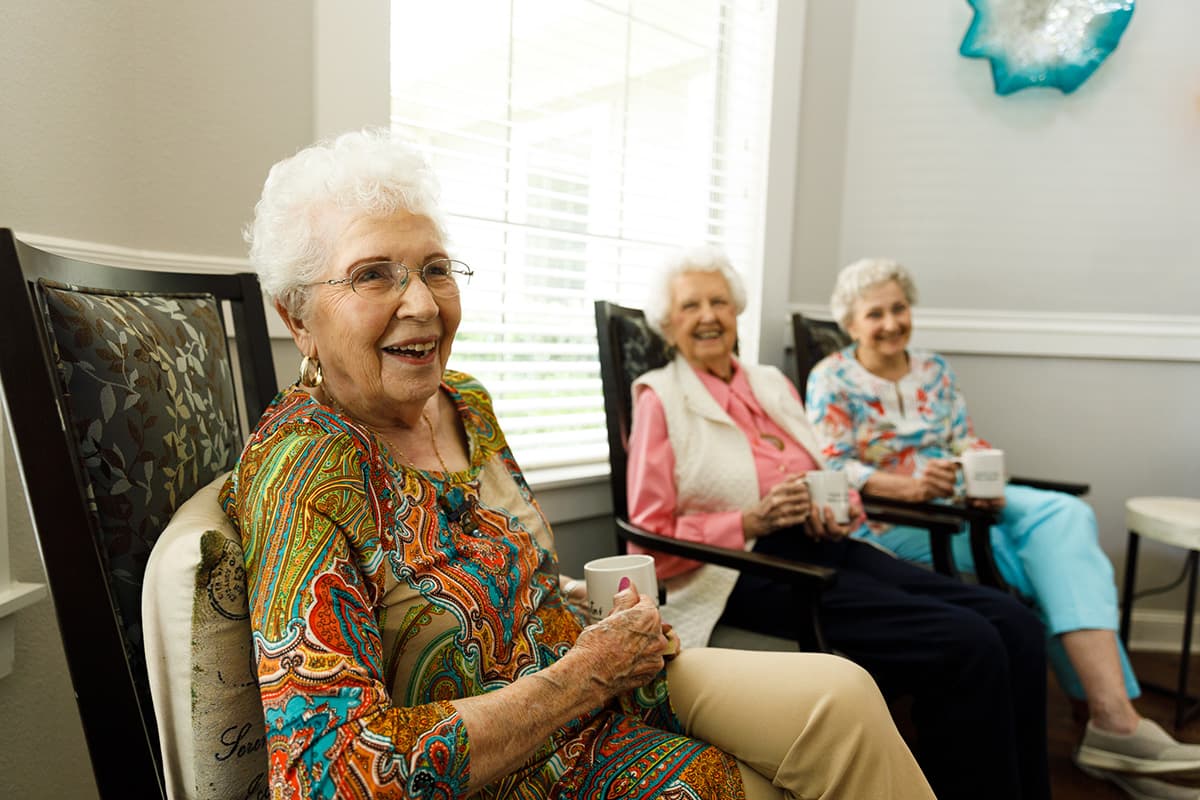
At The Grandview of Chisholm Trail Senior Living, residents thrive through social connection, chef-prepared dining, and daily activities. See why senior living communities differ from skilled nursing facilities and nursing homes.

Who Lives in Nursing Homes and Skilled Nursing Facilities?

Understanding the demographics helps clarify what these facilities actually provide. According to recent industry data, approximately 1.3 million elderly adults (those 65 or older) currently reside in nursing home settings. This represents only 2.3 percent of America’s 55.8 million senior population.

The age breakdown reveals important insights:

  • 16.9% of residents are under age 65
  • 19.5% range between ages 65 and 74
  • 27.2% are between the ages of 75 and 84
  • 36.4% are age 85 or older

These statistics include both short-term rehabilitation stays and long-term residency, which explains why nearly 17 percent of residents haven’t even reached traditional retirement age.

Many younger residents receive post-surgical rehabilitation or address serious medical conditions requiring intensive nursing supervision.

For context, an additional 818,800 elderly Americans live in assisted living communities, which provide a completely different model focused on lifestyle support rather than medical treatment.

Understanding Skilled Nursing Facilities

A skilled nursing facility (SNF) provides short-term, intensive medical care following hospitalization. These facilities serve individuals recovering from surgery, serious illness, or injury requiring daily nursing attention and rehabilitation therapy.

SNFs operate as medical treatment centers rather than residential communities. Patients typically stay days to weeks, occasionally months, while receiving:

  • 24/7 licensed nursing supervision
  • Physical, occupational, and speech therapy
  • Wound care and IV medication administration
  • Post-surgical recovery support
  • Complex medical equipment management

The term “skilled” refers to care requiring licensed medical professionals. Medicare and insurance programs typically cover SNF stays when medically necessary, making these temporary rehabilitation centers accessible for recovery periods.

Most patients return home after SNF stays once they’ve regained sufficient independence. The goal is always rehabilitation and discharge, not permanent residency.

Understanding Nursing Homes

When discussing skilled nursing versus nursing home environments, the primary difference lies in duration and purpose.

Nursing homes provide long-term residential care for individuals with chronic medical conditions requiring ongoing nursing supervision.

Residents in nursing homes typically cannot return home due to complex health needs. These facilities serve those requiring:

  • Continuous medical monitoring
  • Assistance with all daily activities
  • Feeding tube or specialized nutrition support
  • Dementia care with significant behavioral challenges and comorbidities
  • Multiple chronic conditions requiring nursing oversight

Unlike SNFs focused on rehabilitation, nursing homes function as permanent residences for individuals whose medical needs exceed what families or other care settings can provide. These facilities predominantly serve low-income seniors, as costs often become sustainable only through insurance coverage after private funds are exhausted. Families relying on nursing homes for long-term care should know their rights and how to navigate their systems.

Key Differences Between SNFs vs. Nursing Home Care

Understanding skilled nursing facilities and nursing homes requires examining specific distinctions.

Length of Stay

  • Skilled Nursing Facilities: Temporary stays averaging two to three weeks, occasionally extending to 100 days when insurance covers rehabilitation.
  • Nursing Homes: Long-term or permanent residency, often lasting years until end of life.

Primary Purpose

  • Skilled Nursing Facilities: Rehabilitation and recovery with the goal of returning home or transitioning to less intensive care.
  • Nursing Homes: Ongoing custodial care for chronic conditions when home care or other options aren’t viable.

Therapy and Medical Services

  • Skilled Nursing Facilities: Intensive daily therapy sessions (physical, occupational, speech) combined with wound care, IV medications, and post-surgical treatment.
  • Nursing Homes: Basic nursing care, medication management, and assistance with daily activities. Therapy is less intensive and primarily maintenance-focused.

Insurance Coverage

  • Skilled Nursing Facilities: Medicare covers up to 100 days when following a three-day hospital stay and when rehabilitation shows progress. Insurance programs often cover medically necessary SNF care.
  • Nursing Homes: Primarily private pay initially, transitioning to insurance for eligible low-income residents once assets are spent. Long-term nursing home care rarely has insurance coverage.

Environment and Atmosphere

  • Skilled Nursing Facilities: Medical facility atmosphere focused on treatment and recovery. Limited social programming as residents focus on rehabilitation.
  • Nursing Homes: Residential setting but institutional in nature, designed for long-term medical care rather than lifestyle enrichment.

Cost Comparison: What Families Should Expect

Recent statistics (2024) from CareScout reveal the financial reality of these options compared to alternatives:

Nursing Home Care:

  • Semi-private room: $9,277/month
  • Private room: $10,646/month

Alternative Senior Care Options:

  • Assisted living community: $5,900/month
  • Home health aide: $6,483/month
  • Homemaker services: $6,292/month
  • Adult day health care: $2,167/month

These numbers show that nursing home costs exceed those of most other care options by 50 to 80 percent. Families often pursue nursing home care only when medical complexity makes other options unworkable or when insurance coverage becomes necessary.

How to Choose the Right Option

Determining appropriate care requires an honest assessment of your loved one’s situation:

Consider SNF Care When:

  • Recently discharged from the hospital
  • Requires intensive rehabilitation
  • Needs temporary medical supervision
  • The goal is to return home or to assisted living
  • Insurance programs will cover the stay

Consider Nursing Homes When:

  • Chronic conditions require 24/7 nursing
  • Cannot receive adequate care at home
  • Requires feeding tubes or complex medical equipment
  • Low income makes insurance coverage necessary
  • Other care options have been exhausted

Consider Senior Living When:

  • Needs assistance with daily tasks, but not constant nursing
  • Values lifestyle, social connection, and activities
  • Wants chef-prepared dining and engaging programming
  • Prefers community atmosphere over a medical facility
  • Seeks to maintain independence with support available

Frequently Asked Questions

SNFs provide short-term, intensive rehabilitation following hospitalization with the goal of discharge. Nursing homes provide long-term residential care for individuals with chronic conditions that require ongoing nursing supervision, typically serving as their permanent residences.

Insurance typically covers medically necessary SNF stays for rehabilitation, often up to 100 days. Long-term nursing home care is primarily funded through private pay, transitioning to insurance for eligible low-income individuals once their private funds are exhausted.

No. Nursing homes are medical facilities that provide round-the-clock nursing care for individuals with serious health conditions. Senior living communities like assisted living focus on lifestyle support, social engagement, and helping with daily tasks while maintaining independence and dignity.

Most SNF stays last two to three weeks, although some extend to 100 days when insurance covers continued rehabilitation and measurable progress toward specific recovery goals is demonstrated.

Nursing homes primarily serve individuals with complex, chronic medical conditions requiring constant nursing supervision. Many residents are low-income seniors whose care is covered by insurance after private funds are exhausted, or those whose medical needs exceed what other care settings can provide.

The Grandview of Chisholm Trail Senior Living: Where Lifestyle Meets Support

While skilled nursing facilities and nursing homes serve important medical purposes, The Grandview of Chisholm Trail Senior Living offers a completely different approach to senior care. We focus on living well, not just receiving medical treatment.

Social Lifestyle, Not Medical Facility

Our community emphasizes social connection to encourage purpose and joy. Unlike the institutional atmosphere of medical facilities, we create a home-like community where residents enjoy chef-prepared meals in a restaurant, daily activities matching interests and abilities, entertainment and cultural programs, family celebrations and special events, and opportunities for meaningful relationships.

Comprehensive Support Without Institutional Feel

We provide assistance with daily activities while maintaining dignity and independence. Our approach recognizes that needing help doesn’t mean giving up lifestyle, community, or personal choice.

On-Site Healthcare Partnerships

Through partnerships with rehabilitation providers and on-site nursing support, we offer healthcare access when needed without the institutional medical facility atmosphere. Our therapy partners achieve remarkable outcomes:

  • 67% More Active: Residents join fitness programs 3+ times weekly, compared to only 31% of seniors aging at home
  • 1,500+ Daily Steps: More movement built into routines maintains stronger heart health and stamina
  • 25% Fewer Emergency Room Visits: Reduced fall-related emergencies mean greater stability and peace of mind
  • 19% Fall Risk Reduction: Balance screenings and on-site rehab help residents stay confident and independent
  • 55% Improved Walking Speed: Targeted therapy leads to better strength, stability, and mobility
  • 11% Better Balance: Residents regain trust in their steps through regular, guided movement programs

These outcomes demonstrate that appropriate support in the right community helps seniors thrive.

The Choice for Active, Engaged Living

If your loved one needs assistance but doesn’t require the intensive medical care of nursing homes or SNFs, assisted living provides the perfect balance: support when required, independence always respected, and a community that transforms daily life from medical management to meaningful living.

Final Thoughts: Find the Right Fit for Your Family

Understanding the difference between medical facilities and lifestyle-focused senior living helps families make informed decisions matching their loved one’s actual needs.

If rehabilitation following hospitalization is needed, skilled nursing facilities provide appropriate intensive care. If chronic conditions require round-the-clock nursing, nursing homes serve that purpose.

However, if your loved one requires daily living assistance while maintaining independence, dignity, and an engaging lifestyle, senior living communities offer the ideal solution.

The Difference Between Nursing Homes and Assisted Living Near You

Tour our community to experience the difference between medical facilities and communities designed for a high quality of life. See residents enjoying meals together, participating in activities, and building friendships. Meet our compassionate care teams and therapy partners who help residents thrive.

Contact us today to schedule your personal visit and discover how the right living situation makes all the difference.

The Grand | Exterior
Leadership Team

Our team collaborates with community leaders, caregivers, and senior living professionals to provide helpful information on wellness, care options, lifestyle, and planning for the future.

Get More Personalized Guidance

Want to Share This Story?

Keep Exploring Articles for Seniors & Families

Learning about senior living doesn’t have to stop here. Because every family has unique questions, we’ve gathered more helpful blog posts on similar topics that can guide you and your family through the next steps.

Civitas | Seasonal Tips: Asthma Symptoms and Senior Allergies

The Symptoms and Signs of Asthma and Allergies in Older Adults

April brings longer days, blooming flowers, and Earth Month celebrations that remind us to appreciate and interact with the natural world around us. However, for many older adults, spring presents serious challenges rather than simple...

Civitas | Team member assisting memory care resident

A Detailed Look at Memory Care Costs Near South Fort Worth

When families begin researching memory care costs in South Fort Worth, questions about pricing and value naturally arise: What will specialized dementia care actually cost in the Fort Worth area? How does the price of...

Civitas | Early Signs Of Cancer

Recognizing the Early Signs of Cancer in Seniors

You’ve probably spent time worrying about whether your parent might develop heart disease or dementia. But cancer is just as much of a concern as they age. The National Library of Medicine posts that prostate...

What to Know Before a Fort Worth Senior Apartment Search

What Families Should Know Before a Fort Worth Senior Apartment Search

According to the National Council on Aging, 70 percent of older adults will need long-term care at some point in their lives. That statistic might feel overwhelming at first, but here’s the empowering reality: getting...

South Fort Worth Retirement Home Prices and Insights

How to Understand Retirement Home Costs in South Fort Worth

Planning for retirement home costs in South Fort Worth requires understanding both immediate expenses and long-term considerations. When exploring care options for a loved one, many families focus narrowly on monthly fees without considering how...

Over 65? Glaucoma Screening Recommendations for Seniors

January is Glaucoma Awareness Month. That means your New Year’s resolutions should include a visit to the optometrist. Glaucoma is often called the “silent thief of sight” for good reason. According to the CDC, 50...

Ready To Speak With Us In Person?

This website uses cookies.

Schedule a Tour Today!

By submitting this form, you agree to the terms and conditions of our Privacy Policy. You also consent that we can reach out to you either by phone or by using a phone system that can auto-dial numbers. Your consent is not required to use our service.