
When a loved one begins experiencing memory loss, it can feel like the foundation of your relationship is shifting. Conversations that once felt effortless may now require intention, patience, and care.
At Cambridge Court Senior Living in Mesquite, TX, we understand how deeply families want to stay connected with those they love. That’s why we’re sharing compassionate, practical strategies on how to communicate with someone who has dementia, whether your loved one is in the early stages or facing more advanced memory challenges.

Tone Matters: Speak with Calm and Clarity
The tone of your voice can have a stronger impact than the actual words you use. A gentle, reassuring tone helps your loved one feel safe, even if they don’t fully understand what’s being said.
Tips for using a calm tone:
- Speak slowly and clearly, without raising your voice.
- Keep your sentences simple and positive.
- Reassure them when they seem confused or anxious.
At Cambridge Court, our caregivers are trained to prioritize emotional tone over information, helping residents feel at ease during even the most challenging moments. Just as tone sets the emotional stage, your body language reinforces your intention.
Body Language Speaks Volumes
Nonverbal cues — such as eye contact, facial expressions, and gestures — can significantly influence how your message is received. When communicating with someone who has dementia, body language can often say more than words.
Supportive body language includes:
- Maintain eye contact at their level.
- Offer a gentle touch on the hand or shoulder.
- Smile and nod to affirm what they’re saying.
The team at Cambridge Court Senior Living models warm, approachable body language every day, helping our residents feel seen, heard, and respected. When words fall short or confusion arises, redirection becomes a helpful tool.
The Power of Redirection
Dementia can cause your loved one to fixate on worries, memories, or repetitive questions. Instead of correcting them, redirecting the conversation gently can reduce stress and help both of you move forward with less frustration.
Redirection techniques:
- Acknowledge their concern, then offer a distraction (e.g., “Let’s get some tea,” or “Would you like to see your photo album?”).
- Use sensory cues like music, food, or a favorite item to shift focus.
- Avoid saying “You already told me that,” or “That didn’t happen.”
At Cambridge Court, we use redirection to validate feelings while keeping residents engaged in positive, soothing activities. Behind every strategy is one essential ingredient — patience.
Patience is a Superpower
Talking to someone with dementia often requires repeating yourself, waiting for responses, and accepting confusion without frustration. Patience helps preserve your loved one’s dignity and protects your relationship from unnecessary stress.
Ways to show patience:
- Give them extra time to find their words.
- Stay calm, even if they become agitated or emotional.
- Let go of the need to “fix” the conversation — just be present.
Cambridge Court caregivers are trained to respond with empathy and patience, supporting our residents with compassion in every interaction.
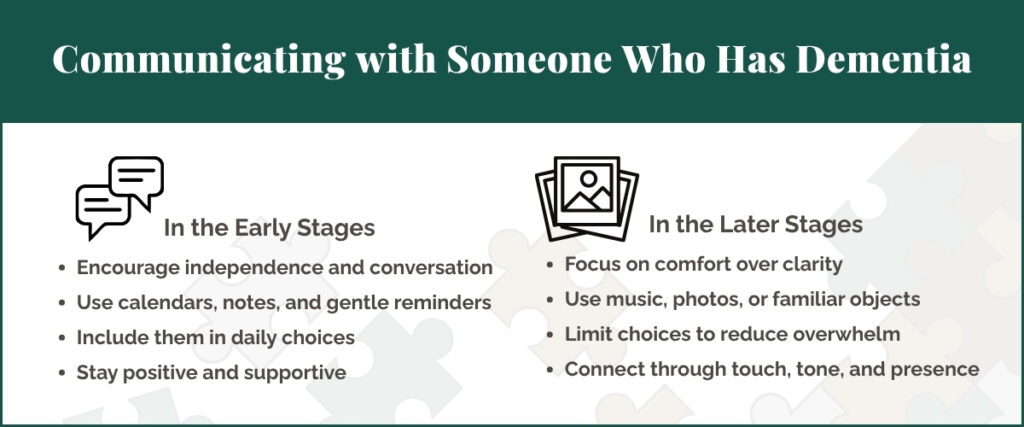
Tailoring Your Approach by Stage
While these tips apply broadly, it’s important to adjust your communication style depending on the stage of dementia.
Early-Stage Memory Loss:
- Encourage conversation and independence.
- Include them in decision-making.
- Use reminders, notes, or calendars to support memory.
Later-Stage Memory Loss:
- Focus more on sensory engagement (music, touch, visual cues).
- Limit choices to avoid overwhelm.
- Prioritize comfort over clarity — sometimes a smile or shared moment means more than words.
At Cambridge Court Senior Living, we customize our care based on each resident’s stage and personality. Families are welcome partners in that journey. Whether you’re supporting a parent at home or exploring senior living options, knowing how to talk to a parent with dementia can bring peace of mind.
We’re Here to Support You
If you’ve ever wondered how to communicate with a senior who has dementia, know that you’re not alone. The journey can be emotional, but you don’t have to navigate it without support.
At Cambridge Court Senior Living in Mesquite, Texas, we offer a memory care program designed to preserve dignity, encourage connection, and support families through every stage. Whether you have questions about our approach or are considering a tour, we invite you to reach out.