
Please ensure Javascript is enabled for purposes of website accessibility

Managing and Reducing UTI Symptoms in Seniors

Table of Contents

Urinary tract infections (UTIs) are a common but often misunderstood health concern for older adults.

Research published in the National Library of Medicine found that over 10 percent of women older than 65 reported having a urinary tract infection within the past year. For women over 85, that number rises to nearly 30 percent. Men also face increased risk as they age, with rates climbing significantly in those over 85.

The challenge is that UTIs in seniors often do not present with typical symptoms like burning or pain during urination. Instead, they can lead to sudden confusion, behavioral changes, or even a rapid decline in physical function. Recognizing these differences is essential for timely treatment.

Civitas Senior Living communities understand the complexity of this issue. With personalized care and healthy dining, we work with families to manage and reduce the risk of infection in older adults.

Team members at Civitas Senior Living help prevent UTIs in seniors with proactive care and personalized support.

Why UTIs Are Different in Seniors

A urinary tract infection occurs when bacteria enter the urinary system. In older people, immune system changes, other chronic health conditions, and certain medications can make infections more severe.

The most common UTIs in seniors include:

  • Cystitis: Infection of the bladder
  • Asymptomatic bacteriuria (ASB): Bacteria in the urine without symptoms
  • Pyelonephritis: Infection of the kidneys
  • Urosepsis: Infection spreading to the bloodstream
  • Prostatitis: Infection of the prostate in men

Conditions such as diabetes, hypertension, chronic kidney disease, and heart problems increase the risk of UTI. These co-existing (or comorbid) health concerns can also make recovery more challenging.

UTI Symptoms in Seniors

Typical symptoms of a UTI include frequent urination, pain or pressure in the lower abdomen, and changes in urine color or odor. However, UTI symptoms in seniors can be harder to recognize.

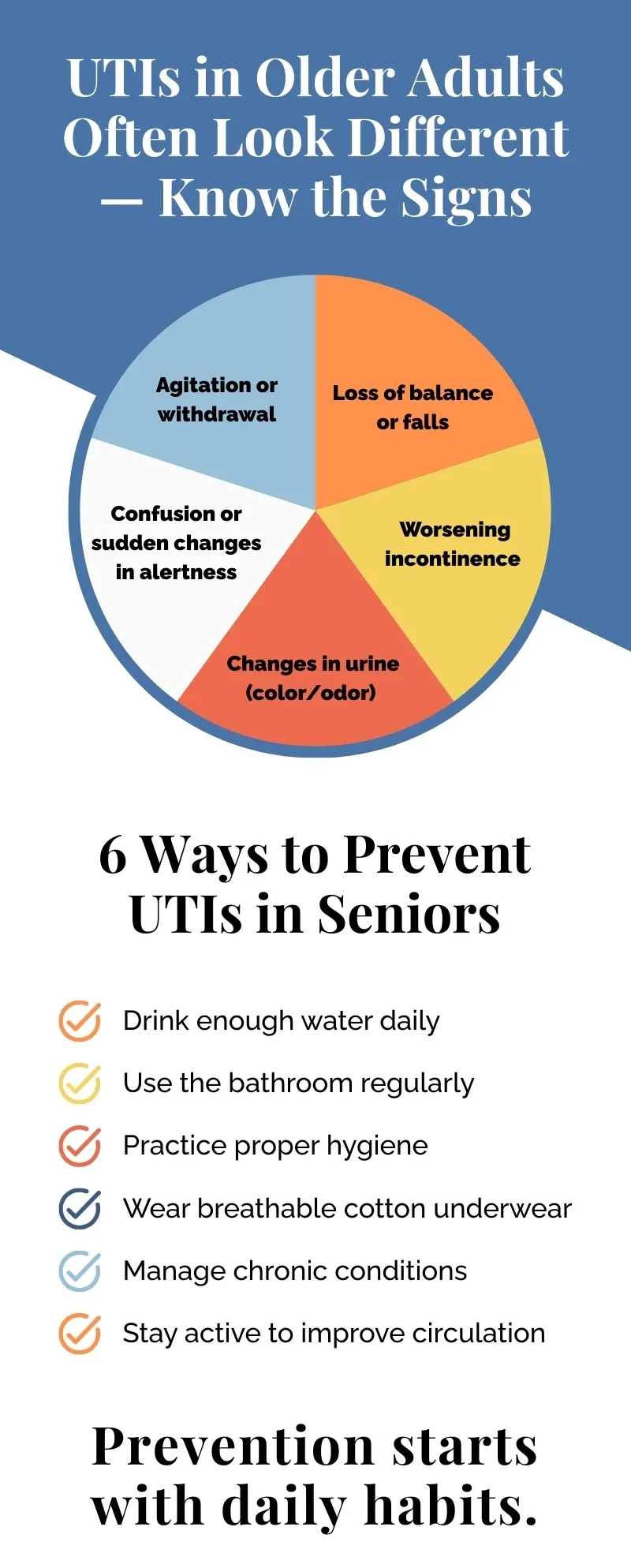
Signs to watch for:

  • Confusion or sudden changes in alertness
  • Increased agitation or withdrawal
  • Loss of balance or falls
  • Worsening urinary incontinence
  • Fever or chills (less common in older adults)

Can UTIs Cause Confusion in Seniors?

Yes.

UTIs and confusion in seniors are closely linked because infections can trigger inflammation and chemical changes in the brain. In older adults, this may cause sudden memory lapses, disorientation, or unusual behavior instead of classic UTI symptoms. Prompt recognition of these changes can lead to faster diagnosis and treatment.

Differences in Men and Women

UTI Symptoms in Senior Women

Women have shorter urethras, making it easier for bacteria such as Escherichia coli to travel into the bladder. Hormonal changes after menopause can also lead to lower levels of protective vaginal bacteria. Common symptoms include urinary urgency, discomfort, and increased cognitive changes.

UTI in Senior Men

Men face a higher risk when they have conditions like an enlarged prostate, which can trap urine in the bladder. This creates an environment where bacteria can grow. Symptoms may include pain in the lower abdomen, difficulty urinating, or blood in the urine.

Risk Factors

Several factors make UTIs more common in older adults:

  • Weakened Immune System: Reduces the ability to fight infection in older adults
  • Urinary Retention: Incomplete emptying of the bladder
  • Urinary Incontinence: Moisture and bacteria can increase the risk of UTI
  • Catheter Use: Can introduce bacteria into the urinary tract
  • Chronic Health Conditions: Including diabetes and kidney problems
  • Dehydration: Less frequent urination allows bacteria to multiply

Preventing UTIs in Seniors

Preventing UTIs are possible with daily habits and awareness. Practical steps include:

  • Drinking enough water to flush bacteria from the urinary tract
  • Using the bathroom regularly and not delaying urination
  • Practicing proper hygiene after using the toilet
  • Wearing breathable cotton underwear and changing it daily
  • Including cranberry juice or supplements in the diet, if approved by a doctor
  • Managing chronic conditions that increase the risk of infection
  • Encouraging regular physical activity to promote circulation and bladder health

Treating UTIs in Seniors

Treatment for a senior UTI usually involves antibiotics prescribed after reviewing urine samples. The type and duration of medication may depend on the severity of the infection, the type of bacteria, and any related health concerns.

Potential side effects of medication, like digestive upset or changes in appetite, should be monitored. Families should also work with healthcare providers to address any underlying causes, such as an enlarged prostate or urinary retention.

For chronic UTI in seniors, doctors may recommend longer courses of antibiotics, lifestyle adjustments, or preventive prescriptions.

Supporting a Loved One Through UTI Recovery

Caring for an older adult with a UTI involves more than giving medicine. It includes:

  • Monitoring for improvements or new symptoms
  • Keeping track of fluid intake
  • Helping with bathroom reminders
  • Encouraging nutrient-rich foods that support the immune system
  • Following up with medical appointments

At Civitas Senior Living communities, team members are trained to recognize early signs of a UTI in seniors. They partner with healthcare providers to treat UTIs promptly and help residents recover with personalized care and engaging activities.

Quick FAQ: UTIs in Seniors

Common causes include urinary retention, incontinence, catheter use, and chronic health issues.

Yes. Women have a higher risk due to anatomical differences, especially after menopause.

Yes. UTIs can trigger sudden confusion or agitation in older adults.

Encourage hydration, proper hygiene, and prompt medical care if symptoms appear.

Final Thoughts About Managing and Reducing UTI Symptoms in Seniors

In conclusion, UTIs in seniors can look different from those in younger adults. The most important thing to take away is this: early recognition and treatment can prevent complications. Families should watch for unusual symptoms like confusion, balance problems, or increased agitation, as these may indicate infection.

Civitas Senior Living communities combine attentive care and nutritious meals to help reduce the risk of UTI in older adults. By understanding symptoms and prevention strategies, families and caregivers can take meaningful steps to protect senior health and quality of life.


Simplify the Senior Health Journey Near You

Find a Civitas Senior Living community near you to discover how we can provide personalized services for you or a loved one.

Arabella of Athens | Exterior front entrance
Leadership Team

Our team collaborates with community leaders, caregivers, and senior living professionals to provide helpful information on wellness, care options, lifestyle, and planning for the future.

Get More Personalized Guidance

Want to Share This Story?

Keep Exploring Articles for Seniors & Families

Learning about senior living doesn’t have to stop here. Because every family has unique questions, we’ve gathered more helpful blog posts on similar topics that can guide you and your family through the next steps.

Civitas | Seasonal Tips: Asthma Symptoms and Senior Allergies

The Symptoms and Signs of Asthma and Allergies in Older Adults

April brings longer days, blooming flowers, and Earth Month celebrations that remind us to appreciate and interact with the natural world around us. However, for many older adults, spring presents serious challenges rather than simple...

Civitas | Team member assisting memory care resident

A Detailed Look at Memory Care Pricing in Athens, Texas

When families begin researching memory care cost in Athens, one question surfaces immediately: How much will specialized dementia care actually cost? According to A Place for Mom, the average monthly cost of memory care in...

Civitas | Early Signs Of Cancer

Recognizing the Early Signs of Cancer in Seniors

You’ve probably spent time worrying about whether your parent might develop heart disease or dementia. But cancer is just as much of a concern as they age. The National Library of Medicine posts that prostate...

What Are the Best Athens Senior Apartment Search Tips?

What Are the Best Senior Apartment Search Tips in Athens?

According to the National Council on Aging, 70 percent of older adults will need long-term care at some point in their lives. This statistic might feel overwhelming at first, but here’s the empowering reality: getting...

How Much Do Retirement Communities Cost in Athens?

Athens Retirement Community Apartment Cost Overview

When you search for the cost of an Athens retirement community, the numbers can feel overwhelming. Many families hesitate to explore senior living options because they worry about cost. This uncertainty keeps them from discovering...

Over 65? Glaucoma Screening Recommendations for Seniors

January is Glaucoma Awareness Month. That means your New Year’s resolutions should include a visit to the optometrist. Glaucoma is often called the “silent thief of sight” for good reason. According to the CDC, 50...

Ready To Speak With Us In Person?

This website uses cookies.

Schedule a Tour Today!

By submitting this form, you agree to the terms and conditions of our Privacy Policy. You also consent that we can reach out to you either by phone or by using a phone system that can auto-dial numbers. Your consent is not required to use our service.