Once we turn 60, the gradual loss of muscle mass can begin affecting our independence and quality of life.
You might see your mom struggling to twist open a jar, or your dad being unable to lift a heavy pot. But muscle loss isn’t just about seeming weaker. It’s about your loved one’s ability to live confidently, avoid dangerous falls, and maintain the dignity of self-sufficiency.
Gaining muscle after 60 is not only possible; it’s essential for healthy aging. The StoneCreek of North Richland Hills caregiving team employs this philosophy in our programming, because muscle mass matters.
Why Muscle Mass Matters So Much
After age 30, adults lose approximately 3-8% of their muscle mass per decade, with this loss accelerating after 60. This condition, called sarcopenia, affects nearly 30% of adults over 60 and up to 50% of those over 80.
The consequences extend far beyond appearance: Strong muscles serve as the foundation for the daily activities we often take for granted. And when muscle mass declines, seniors face an increased risk of falls, fractures, and loss of independence.
The domino effect of muscle loss creates a dangerous cycle. Weakness leads to reduced activity, which accelerates further muscle loss. This progression can transform a vibrant senior into someone requiring constant assistance for basic tasks.
Research shows that seniors who maintain muscle mass experience better metabolic health, improved bone density, and enhanced cognitive function. Their immune systems remain stronger, wound healing improves, and the risk of chronic diseases decreases.
The Science Behind Gaining Muscle After 60
Many families wrongly believe that muscle building after 60 is impossible or dangerous, preventing older loved ones from pursuing strength activities.
Scientific evidence proves, however, that older adults can build muscle at any age through proper resistance training. In fact, studies show seniors can increase muscle mass 10-15% within 16 weeks! While protein synthesis slows and recovery takes longer, the body retains adaptation abilities with appropriate stimulus, rest, and nutrition.
How to Gain Muscle as a Senior: The Foundation
Starting a muscle-building program requires careful planning and realistic expectations. Begin by understanding your loved one’s current fitness level, health conditions, and limitations—consult their healthcare providers to ensure certain exercise routines are safe.
Help your loved one ease into an exercise routine, gradually increasing weight, repetitions, and duration. Seniors need consistency over intensity: we suggest three weekly resistance sessions targeting major muscle groups, lasting 30-45 minutes. Rest days are vital, so allow 48-72 hours between same-muscle sessions for adequate recovery and growth.
Senior Weight Training Exercises That Build Real Strength
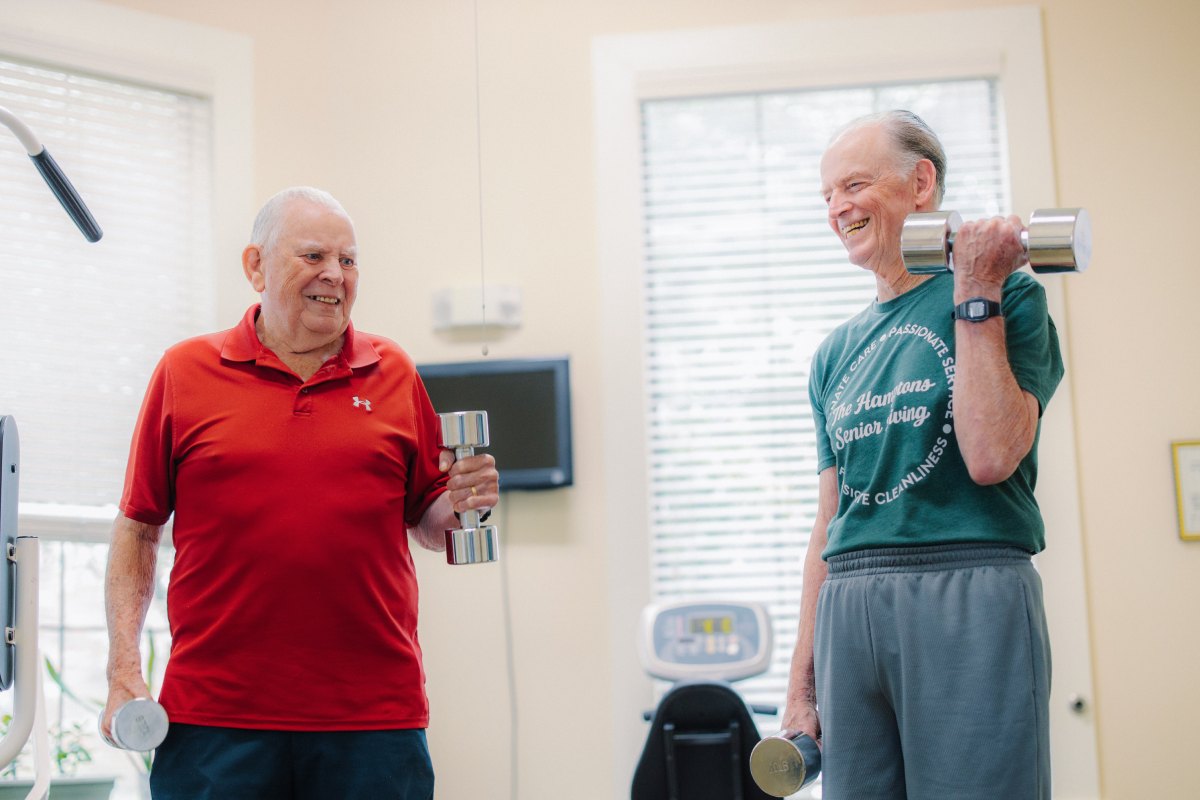
The question “should seniors use dumbbells?” typically arises from safety concerns. But with proper guidance and appropriate weight selections, the answer is a resounding yes. Dumbbells offer versatility, allow for natural movement patterns, and accommodate various strength levels.
Another approach, body weight training, focuses on functional movements that translate to daily activities. Squats improve the ability to rise from chairs and climb stairs; chest presses help with pushing movements like opening heavy doors. Rowing exercises strengthen the back muscles essential for posture and lifting.
Starting with bodyweight exercises builds a foundation for more advanced training: Wall push-ups, chair-assisted squats, and standing marches prepare the body for weighted movements. As strength improves, seniors can gradually introduce light dumbbells.
More Tips for Gaining Muscle After 60
Our StoneCreek of North Richland Hills fitness experts have some more suggestions for gaining muscle after 60:
- Bicep curls can strengthen arms to make carrying groceries easier.
- Shoulder presses promote overhead reaching ability.
- Leg extensions strengthen the quadriceps muscles that are vital for walking and balance.
- Dumbbell exercises for seniors should emphasize controlled movements and full range of motion.
- Balance and stability exercises complement strength training perfectly. Single-leg stands, heel-to-toe walking, and gentle yoga poses reduce fall risk while supporting muscle development.
Now that you have an idea of how to gain muscle as a senior through exercise, let’s move on to nutrition.
Fueling Senior Strength Through Carbs and Protein
Muscle building requires adequate nutrient intake before and after exercising.
- Carbs: Pre-workout, eat healthy carbohydrates like whole-grain cereals (with low-fat or fat-free milk), brown rice, and fruits and vegetables.
- Protein: Spread high-quality protein across meals through lean meats, fish, eggs, dairy, legumes, and nuts; also consume protein within two hours post-workout.
A protein-carbohydrate snack like Greek yogurt with berries or apple slices with almond butter maximizes muscle-building response and supports recovery. Hydration is also essential: Aim for 8-10 glasses of water daily, with more on training days.
Senior Weight Training in North Richland Hills, TX
Finding appropriate fitness resources makes the difference between success and frustration. If you’re searching for senior weight training in North Richland Hills, look for community centers, specialized fitness facilities, and senior living communities that have classes.
Many local gyms offer senior-specific programs with trained instructors who understand age-related considerations. These programs provide social interaction alongside physical benefits, creating accountability and motivation that individual efforts often lack. Keep the following in mind:
- Professional guidance is critical, especially for beginners. Without proper form and progression, there’s a risk of injury.
- If your loved one has medical conditions, they might need modifications unavailable in group classes.
- You might need to provide transportation to the fitness center if your family member doesn’t drive.
The camaraderie and mutual encouragement found in these settings motivate continued participation better than solitary exercise routines. That’s why StoneCreek of North Richland Hills has an on-site fitness center and scheduled exercise classes.
We Offer Senior Weight Training Exercises
At StoneCreek of North Richland Hills Senior Living, we understand that maintaining muscle mass is vital for your loved one’s independence and quality of life. Our health and wellness programming includes professionally supervised classes, nutritional support, and personalized care plans designed specifically for seniors.
In addition to our fitness center, we offer Fit for You exercise classes. Examples of the latter include:
- Yoga and meditation
- Kick boxing
- Tai chi
- Exercise with weights
- Zumba dancing
The My Wellness program is at the heart of the fitness regime built for our assisted living and memory care residents. Our team works with our residents, their families, and third-party health care professionals to create personalized care plans. We nurture their physical health and holistic well-being, factoring in their history, medication, physical abilities, social and mental well-being, and preferences.
Improved Health and Wellness is Possible
Don’t let muscle loss rob your family member of their vitality and freedom. Contact StoneCreek of North Richland Hills in Texas and learn how our fitness pros help seniors build their strength, prevent falls, and maintain the active lifestyle they deserve.