How We Support Nutrition and Dementia Care
Caring for a loved one with dementia is complex, and nutrition is one of the most overlooked challenges. As memory declines, it becomes harder for individuals to plan meals, stay hydrated, or recognize when they are hungry.
Family caregivers often find themselves overwhelmed, not just with cooking, but with ensuring each bite supports both body and brain.
The connection between nutrition and dementia is well documented. What’s less discussed is how difficult it is to maintain that connection at home. That’s where expert support can help.
At Civitas Senior Living, our memory care neighborhoods — The Cottage — make mealtimes easier, healthier, and more meaningful for both residents and families.

Nourish and Flourish in Memory Care
Preserving dignity for a loved one includes how and what they eat. The dining program is a significant factor when choosing a memory care community. Download our guide to senior nutrition and how our communities simplify the process.
Why Nutrition for Dementia Is So Important
Nutrition plays a critical role in how the brain functions. Dementia often changes eating habits in subtle ways, including a decrease in appetite, poor coordination, and a shift in food preferences.
Without guidance, these changes can lead to unintentional weight loss, poor nutritional status, and an increased risk of developing dementia-related complications.
Over time, people with Alzheimer’s or other forms of dementia may:
- Forget to eat or drink
- Have difficulty using utensils or swallowing
- Struggle with smells or tastes
- Reject certain food textures
- Experience confusion at mealtimes
These changes can reduce food intake and make it harder to maintain a balanced diet. When combined with other health conditions, nutritional concerns may become serious.
Public health experts recognize that proper dementia care must include regular, thoughtful meals. Whether at home or in a professional setting, mealtime is more than nourishment — it’s a chance to connect, feel comforted, and sustain independence.
The Mediterranean Diet: A Trusted Tool for Brain Health
When planning meals for a loved one with memory loss, one of the best frameworks to follow is the Mediterranean-DASH Intervention for Neurodegenerative Delay, also called the MIND diet. It combines elements of two well-researched diets, focusing on foods that support brain function and reduce inflammation.
There is strong evidence that this diet may help reduce cognitive decline and lower the risk of developing dementia.
Key food items to include:
- Leafy greens, berries, and colorful vegetables
- Whole grains and legumes
- Lean proteins such as fish and poultry
- Healthy fats like olive oil and nuts
- Limited intake of saturated fat
These foods are rich in antioxidants and fatty acids, both of which protect the brain’s structure and help regulate energy levels. Meals based on the Mediterranean diet are nutritious, familiar, and easy to adapt to different preferences.
Helping at Home: Strategies for Caregivers
For family caregivers, getting your loved one to eat well can become a daily source of stress. Even if you follow a healthy meal plan, other factors can get in the way. Knowing how to simplify the process can ease tension for both of you.
Here are a few practical tips:
- Reduce Choices: Present one or two options instead of a full menu.
- Use Visuals: Show a picture of the meal or plate it ahead of time to aid recognition.
- Serve Smaller Portions: Cut food into manageable bites or offer finger foods that don’t require utensils.
- Create a Calm Environment: Reduce distractions and noise to make meals feel safe and routine.
- Keep a Routine: Eat meals at the same time each day.
- Stay Hydrated: Offer water or juice throughout the day, not just at mealtimes.
Even with these efforts, it’s common to feel like you’re falling short. You may worry about malnutrition, missed medications, or weight fluctuation. When this happens, it might be time to consider full-time support that can simplify everything.
The Cottage: Memory Care That Makes Mealtimes Easier
Civitas Senior Living communities are home to The Cottage — a secure, nurturing memory care neighborhood where residents receive personalized attention. Nutrition is a cornerstone of our care model.
Our approach doesn’t just meet the dementia and nutritional needs of older adults. It helps them rediscover joy in food, movement, and daily connection.
Inside The Cottage Dining Experience:
- Three homestyle meals a day, plus snacks, all prepared fresh
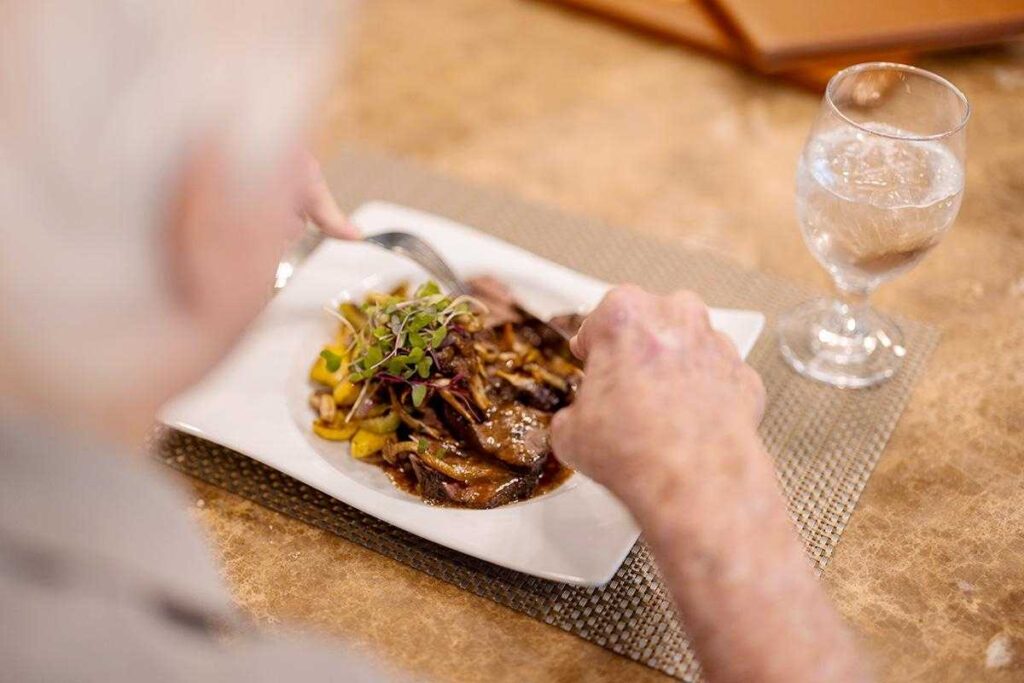
- MINDful Menu, inspired by the Mediterranean diet to support brain health
- Simplified dining with picture menus and smaller portions
- Finger foods and easy-to-handle options that promote self-feeding
- Consistent hydration, guided by team members and built into the daily routine
- Hand towel aromatherapy before and after meals, signaling comfort and routine
We design every element of dining around maintaining adequate nutrition and independence. These features reduce confusion, allowing residents to enjoy their food without frustration or embarrassment.
Cooking with Connection: Our “In The Kitchen” Program
Food and drink are often tied to memory, family, and comfort. That’s why our In The Kitchen activity invites residents to participate in simple food prep alongside team members. Residents might help:
- Shuck corn
- Whisk batter
- Mix dough
- Pass ingredients
- Plate and presentation
Even these small steps make a big difference. They provide gentle sensory engagement, boost confidence, and support cognitive activity. For some residents, it’s also a meaningful way to reconnect with lifelong routines.
Support From Trained Team Members, Every Step of the Way
What sets The Cottage apart is not just our meals — it’s the people behind them. Our team is trained to identify changes in appetite, behavior, or swallowing. When needed, we offer referrals to a speech therapist or other specialists to ensure that every resident continues to thrive.
We monitor:
- Food intake
- Signs of discomfort or disinterest
- Physical challenges with chewing or swallowing
- Sudden weight loss or changes in energy
From dining team members to caregivers, we all work together to protect each resident’s nutritional status and overall well-being.
When It’s Time to Consider Support Near You
Caring for someone with dementia at home can be deeply rewarding, but it can also be physically and emotionally exhausting. Nutrition is just one of the many areas where even small struggles can add up.
Memory care in The Cottage is designed to reduce your challenges. With expert support, balanced meals, and a setting built around dignity, we make it easier for families to step into a role of quality time, not constant responsibility.
Discover Nutrition for Alzheimer’s and Dementia Care Near You
You don’t have to do it alone. Legacy Oaks of Azle is here to simplify your journey to senior living and support the full picture of health — body, brain, and heart.
Contact us today to arrange a visit.