Two questions come up again and again when a loved one nears the end of a rehabilitation stay. Can they go home after this? What if they still need help?
These are the right questions to be asking, because the answers shape not just the next few weeks, but how well a senior recovers over the long term.
Understanding Skilled Nursing and Rehabilitation
The terms “skilled nursing” and “rehabilitation” are often used interchangeably, but they serve distinct purposes.
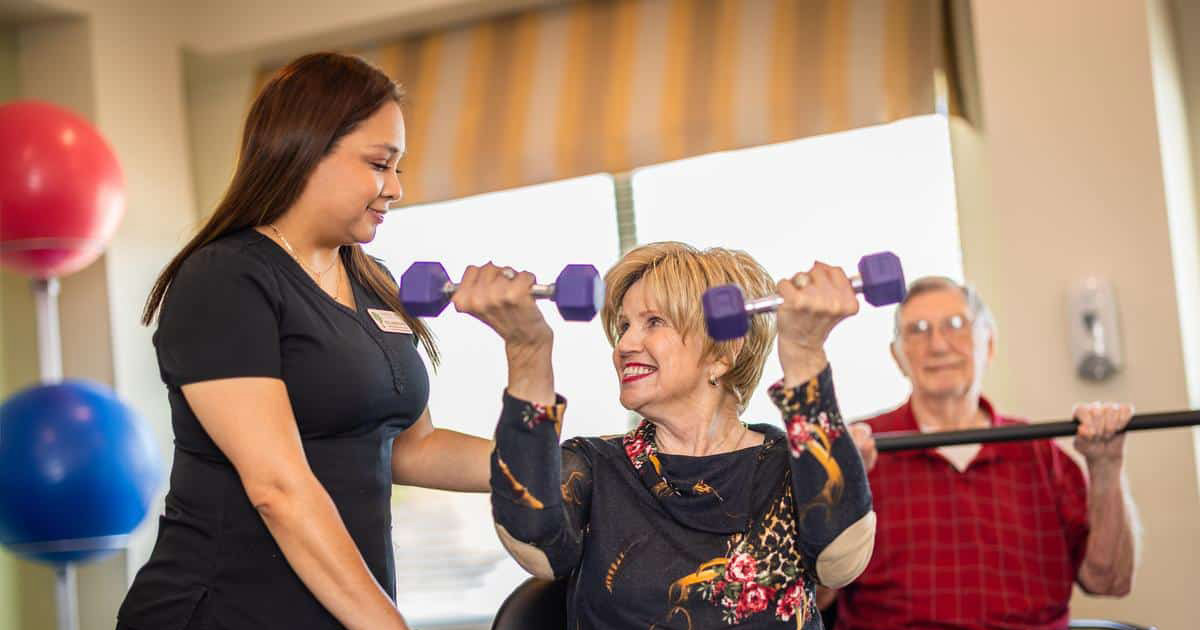
Rehabilitation is short-term and goal-oriented. Following hospitalization for surgery, a fall, or a stroke, patients work with physical, occupational, and speech therapists to regain specific functions. Most stays run two to six weeks, depending on recovery progress and insurance coverage. Medicare covers up to 100 days in skilled nursing settings following a three-day hospital stay when measurable progress continues.
Skilled nursing addresses more complex medical needs. A registered nurse provides care beyond what therapy alone covers, including:
- Wound care
- IV medication
- Vital sign monitoring
- Physician coordination
Skilled nursing and rehabilitation often occur in the same setting, but they are not the same service.
Approximately 5.6 million older adults complete rehabilitation episodes in the United States each year. With 15% of seniors being considered frail and requiring post-treatment rehab care, families increasingly face this decision.
Why Seniors Need Rehabilitation
The most common reasons older adults enter rehab include:
- Falls and fractures, including the roughly 319,000 hip fracture hospitalizations each year
- Post-surgical recovery from joint replacements, cardiac procedures, and orthopedic repairs
- Stroke rehabilitation addressing mobility, speech, and daily functioning
- General deconditioning caused by hospitalization itself, even for minor conditions
At least one in four older adults experiences a fall each year, resulting in 3 million emergency room visits. Falls do not just affect mobility. They erode confidence and often begin cycles of declining independence that require sustained therapeutic intervention.
The Risk of Going Home Too Soon
Returning home directly after rehab is not always the best next step, and in Flagstaff, that risk carries additional weight.
At elevations above 6,900 feet, Flagstaff winters bring ice, snow, and terrain that challenge balance and mobility even for healthy adults. For someone still rebuilding strength after a hip fracture or stroke, navigating icy sidewalks or steep approaches can undo weeks of progress. A fall at home without immediate support available can reset recovery entirely.
Beyond the physical setting, home presents structural barriers. Steps, narrow bathrooms, and the absence of 24/7 support create gaps that scheduled home health visits alone may not close.
When care needs exceed what those visits can cover, moving from rehab to assisted living offers a more supported path forward.
When Assisted Living Is the Right Next Step
The transition from rehab to assisted living is not a step backward. For many seniors, it is the decision that protects and builds on what rehabilitation achieved.
Assisted living provides what home cannot consistently offer:
- Round-the-clock care teams available for immediate support
- Medication management handled by trained team members
- Daily meals, housekeeping, and maintenance removed from the resident’s plate
- Social engagement that counters the isolation often accompanying recovery at home
The goal is not simply to heal, but to maintain the gains from rehabilitation in a setting equipped to support them.
Traditional skilled nursing and rehab centers address physical recovery, but the setting is often institutional. Once therapy sessions end, patients return to clinical rooms with limited opportunity for social engagement or dignified daily life. Families and seniors increasingly ask whether the steps to move to a senior living community might offer something better, and the answer is often yes.
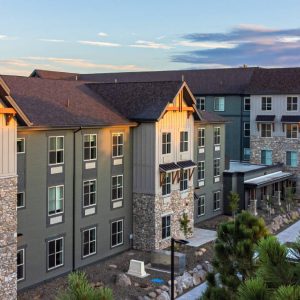
Moving to Residential Senior Living and Care at The Bluffs of Flagstaff Senior Living
For Flagstaff families navigating the step into assisted living after a hospital or rehab stay, The Bluffs of Flagstaff offers a continuity of care, on-site therapy, and a daily life designed around recovery and well-being. We are proud to be recognized by U.S. News & World Report for Best Independent Living and Best Memory Care in 2026.
On-site rehabilitation through Select Rehabilitation means physical, occupational, and speech therapy are available without coordinating outside transportation. Residents involved in this program are more active, have fewer emergency room visits, and have a 19% lower risk of falls.
When Flagstaff winters make travel difficult, that accessibility matters.
When formal rehabilitation concludes, our community supports continued progress through restaurant dining, social and wellness programming, and an indoor pool well-suited for low-impact movement and ongoing strengthening.
Our team works to simplify the transition through professional partnerships assisting with financial, legal, and moving guidance. We offer a standard of care that starts and extends well beyond the rehab period.