Countless seniors put off having necessary knee replacement surgeries. That’s not surprising, especially if they’ve heard frightening stories about pain and extended recovery times. The surgery takes just a few hours, but thinking about the aftermath feels more worrisome.
Truth: The process isn’t a walk in the park, but walking in parks is usually much more enjoyable after surgery and recovery. Many Long Creek Assisted Living and Memory Care residents have had this procedure with successful outcomes.
Our caregivers are familiar with these timelines and help residents and family members understand the process. Knowing what to expect helps seniors establish expectations and celebrate every milestone as they regain mobility.

Knee Replacement Surgery 101
The Mayo Clinic posts that knee surgery involves replacing damaged cartilage and bone with plastic and metal parts. But if just one part of a knee is damaged, the patient might be fine with a partial knee replacement. When the entire joint is damaged, physicians typically recommend full knee replacement.
Many seniors go home the same day as their surgeries. But why does the recovery timeline take so long? The body needs weeks or months to fully adapt to the new joint and rebuild the supporting structures around it.
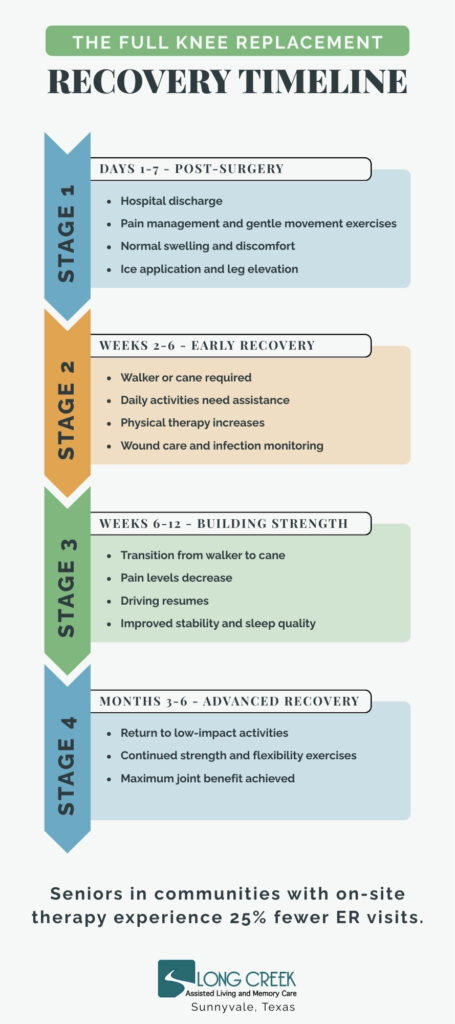
The Full Knee Replacement Recovery Timeline
Most seniors complete this recovery within three to six months, though experiences vary significantly. The first few weeks require intensive care and attention. The patient’s age, overall health, and commitment to physical therapy directly influence healing progress.
During the initial phase, expect frequent medical appointments and careful surgical site monitoring. Pain management becomes a daily priority, with medications balanced to provide comfort while allowing mobility.
The timeline progresses through distinct phases, each bringing challenges and victories.
Immediate Post-Surgery Stage (Days 1-7)
Hospital discharge typically occurs within one to three days. Medical staff monitor vital signs, manage pain levels, and begin gentle movement exercises. Your parent may feel disoriented from anesthesia and experience significant discomfort.
Swelling around the knee is normal and expected. Ice application and elevation help reduce inflammation. Physical therapy usually starts as soon as possible, encouraging small movements to prevent stiffness and promote circulation.
Early Recovery at Home (Weeks 2-6)
During this phase of the knee replacement healing timeline, your parent will likely use a walker or a cane for mobility support. Daily activities like showering and climbing stairs remain difficult without assistance. Wound care continues with regular dressing changes and infection monitoring: Drainage from the incision site is normal, but excessive bleeding, fever, or unusual swelling requires immediate medical attention.
Early recovery physical therapy appointments will now increase in frequency and intensity. Therapists focus on restoring range of motion, building strength, and improving balance. Home exercises complement professional sessions, requiring dedication and family encouragement; expect continued swelling, mild discomfort, and gradual improvement.
Building Strength and Mobility (Weeks 6-12)
Knee replacement rehab at this stage focuses on building strength and stamina. Your parent will likely graduate from walker to cane usage, demonstrating improved stability and confidence. Pain levels decrease substantially, though some discomfort during weather changes may persist.
Driving typically resumes around six to eight weeks post-surgery, assuming adequate strength and range of motion return. This milestone significantly improves independence and mental well-being. Sleep quality often improves as pain decreases and comfortable positions become possible again.
Advanced Recovery and Long-term Healing (Months 3-6)
The final stages after a knee replacement focus on returning to regular activities and achieving maximum benefit from the new joint. Most seniors can resume low-impact walking, swimming, and gentle hiking. They should avoid high-impact sports to protect the artificial joint.
Knee replacement rehab may continue, with emphasis on maintaining strength and flexibility gains; many seniors benefit from ongoing exercise programs designed for joint replacement recipients. Full recovery varies among individuals, with some achieving excellent results within just three months; others need more time.
The stages of knee replacement recovery may include temporary setbacks that can discourage patients and families. However, most seniors who stay proactive and committed see significant improvements.
Long Creek Assisted Living and Memory Care Offers On-Site Knee Replacement Rehab for Residents
A long knee replacement healing timeline becomes more stressful when seniors must constantly travel to therapy appointments. Long Creek seniors have it easier because we offer on-site sessions through our partnership with Select Rehabilitation, a nationally recognized program.
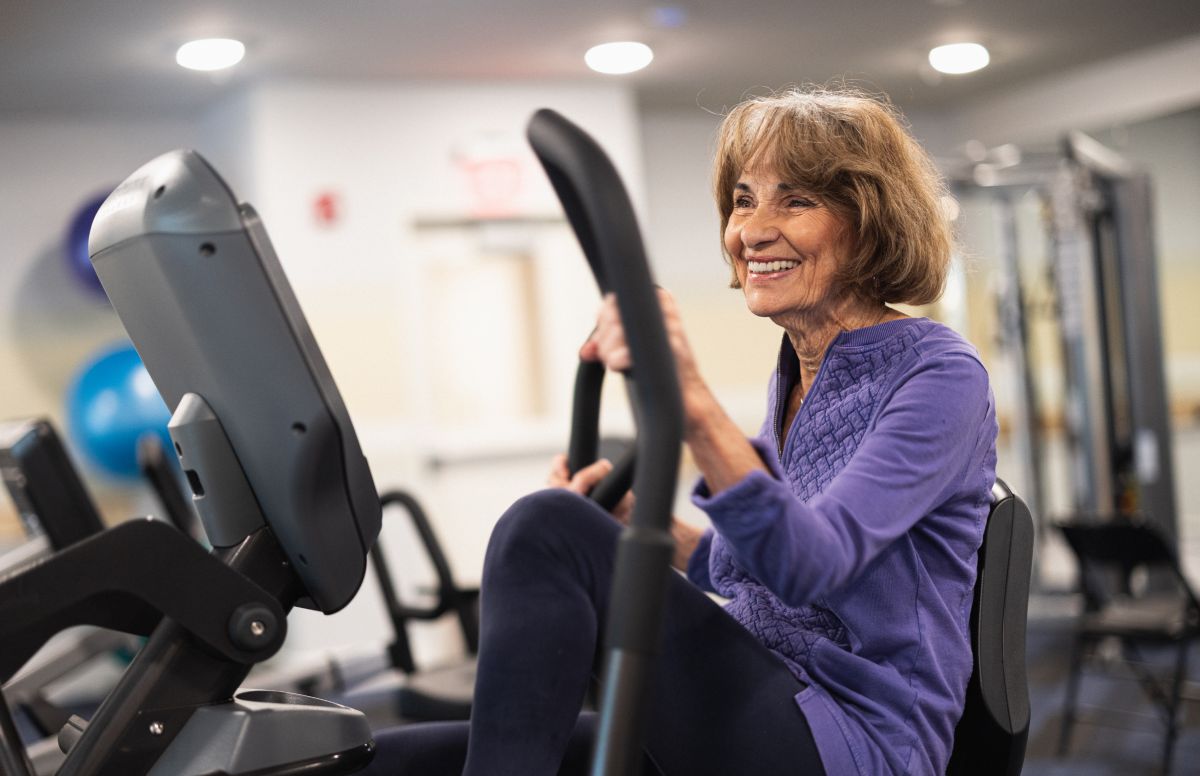
Select Rehab offers a full range of physical, occupational, and speech therapy services that allow our seniors to bounce back from injuries and manage their health conditions more effectively. Our residents also have access to our fitness club, walking trails, scheduled transportation, and Fit For You exercise classes.
Frequently Asked Questions

How long does knee replacement recovery take for seniors over 75?
Recovery typically takes four to six months for seniors over 75, but age alone doesn't determine outcomes.
What activities should be avoided permanently after knee replacement?
Avoid high-impact activities like running, jumping, sports, and heavy weightlifting. Contact sports and activities with high fall risk are also inadvisable.
How do I know if my parent's knee replacement recovery is progressing normally?
Normal progress includes gradually decreasing pain, improving range of motion, and increasing mobility. Concerns arise with persistent fever, excessive swelling, or inability to bear weight as prescribed.
Here’s What To Remember About Knee Replacement Recovery
Timelines vary by patient, but following the physicians’ and therapists’ orders and faithfully attending rehab sessions smooths things along. Long Creek has the medical oversight, on-site resources, and daily support that optimize healing outcomes for seniors.
Don’t Let Recovery Derail Your Parent’s Independence
Your parent deserves the highest quality care during their knee replacement journey. Contact Long Creek in Sunnyvale, Texas, today to learn how Select Rehab and our personalized care programs can support your loved one during this vital healing phase.