When seniors spend hours sitting in front of the TV or appear unmotivated to change out of their pajamas, their loved ones might blame it on laziness. Yet the actual culprit might be fatigue; as their energy levels plummet, vitality diminishes. It can feel heartbreaking at the very least, as they become too tired to engage in activities that once brought them joy.
But this battle needn’t define them. At The Bluffs of Flagstaff Senior Living, we approach this in several ways. We offer foods to reduce fatigue, provide daily activities for all interests, and create individualized care plans. Rest and relaxation are also integrated into our programming, as we strike the perfect balance between proper nutrition, purposeful engagement, and comfortable downtime.
And once you identify what’s draining their get-up-and-go, you can develop targeted strategies that help them keep moving.
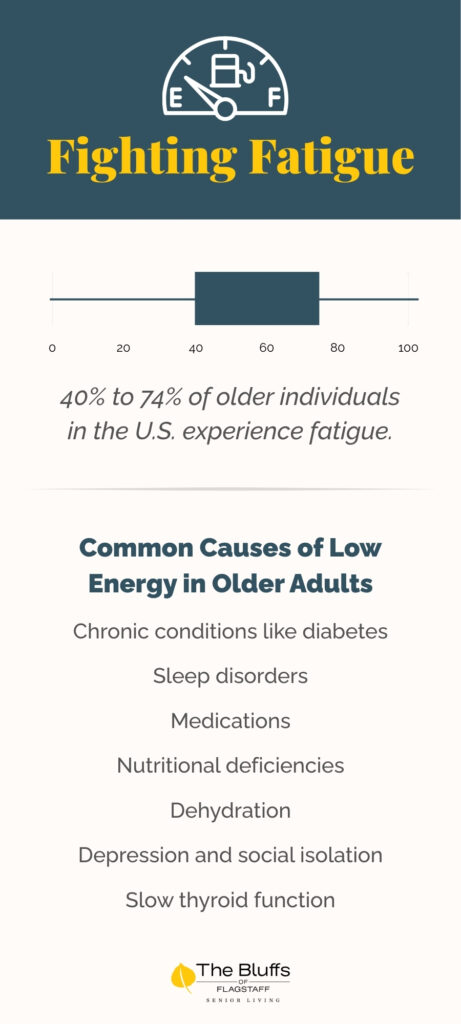
The National Library of Medicine reports that up to 74% of older adults experience fatigue. Here are some of the key contributing factors:
- Chronic conditions like diabetes, heart disease, and arthritis place ongoing demands on the body’s resources.
- Sleep disorders disrupt the restorative processes that occur during quality rest.
- Medications often list fatigue as a side effect.
- Nutritional deficiencies become increasingly common with age. Iron deficiency leads to anemia, while vitamin B12 deficiency affects nerve function and energy production.
- Dehydration occurs more easily in seniors, as the body’s ability to conserve water decreases over time.
- Depression and social isolation compound these physical factors, creating emotional barriers to maintaining energy and motivation.
- Thyroid function may slow down, affecting metabolism and energy production throughout the body.
These interconnected causes require a comprehensive approach that addresses the underlying issues and provides immediate support through proper nutrition.
High-Energy Foods for Seniors That Fight Fatigue
Sustained energy starts with nutrient-dense whole foods that fuel the body without blood sugar spikes.
- Complex carbohydrates in oatmeal, quinoa, and sweet potatoes release glucose slowly, preventing energy crashes from refined sugars.
- Lean proteins — fish, poultry, eggs, and legumes — provide amino acids for muscle maintenance.
- Iron-rich spinach, lean red meat, and lentils deliver an energy boost for the elderly.
- Healthy fats from avocados and nuts support hormone production while providing lasting fuel.
- Antioxidant-rich berries combat inflammation that drains energy reserves,
- Dark leafy greens supply folate and magnesium for energy metabolism.
But remember, high-energy foods for seniors work best in balanced meals rather than isolated snacks. And consistent meal planning with foods to reduce fatigue requires smaller, frequent meals to prevent blood sugar fluctuations. The Bluffs of Flagstaff residents also enjoy balanced breakfasts that establish sustained energy patterns throughout their days.
What Seniors Can Drink for More Energy
Proper hydration drives energy maintenance, yet many seniors struggle with adequate fluid intake. Water is number one, but that can become monotonous. Try green tea, which offers moderate caffeine plus L-theanine for sustained alertness without jitters. Tart cherry juice supports sleep quality; bone broth provides protein and minerals. Limit alcohol — it disrupts sleep and causes dehydration.
Traditional energy drinks containing high caffeine and sugar levels are generally not recommended for seniors due to potential heart complications and sleep disruption.
Habit-forming Elderly Energy Boosts
Long-term success requires consistent meal planning and sustainable habits that support energy naturally. Regular physical activity, even gentle walking or stretching, improves circulation and muscle strength, while consistent sleep schedules regulate the body’s natural energy cycles.
Socialization provides emotional energy that complements those strategies. Participating in community activities, family gatherings, or hobbies creates motivation that transcends physical fatigue. Finally, regular medical checkups ensure underlying health conditions receive appropriate treatment; health care providers can optimize medication timing and dosages to minimize fatigue-related side effects.
Frequently Asked Questions
You could see gradual improvements after two to four weeks of adding consistent high-energy foods for seniors to a loved one’s diet. However, underlying health conditions may impact the timeline.
Many blood pressure medications, antihistamines, and some antidepressants list fatigue as a potential side effect. Never discontinue medications without consulting your health care provider.
Most seniors should aim for six to eight glasses of fluid daily, though individual needs depend on health conditions, medications, and activity levels. Those with heart or kidney conditions may require modified fluid intake as directed by their health care team.
We offer two upscale restaurants, a fresh salad bar, and chef-driven meal planning that focuses on healthy, delicious dining. Our My Food program includes food-themed events, and we tailor our MINDful Menu for residents in memory care.
Closing Thoughts About Senior Energy Boosters
The most important tip to take away is this: Your loved one’s energy doesn’t have to remain trapped behind fatigue and exhaustion. Addressing nutritional deficiencies, incorporating foods to reduce fatigue, and working with health care providers helps seniors reclaim the vitality that makes life meaningful.
Tour Our Community and Sample High-Energy Foods
For seniors, we create an atmosphere where they rediscover their zest for life. Your parent deserves to thrive with energy and purpose. The Bluffs of Flagstaff Senior Living team understands the complex relationship between nutrition, health, and vitality in older adults. Contact us today to schedule a lunch tour and get a taste for healthy, rewarding senior living.