
Please ensure Javascript is enabled for purposes of website accessibility

Recognizing the Signs of Cognitive Decline

Table of Contents

When seniors misplace keys or forget the name of a favorite TV show, we might brush those off as simple forgetfulness. But the true signs of mental decline are much more concerning. To clarify, the frustrations of normal aging and the symptoms of cognitive deficits are two separate categories. But how do we differentiate them?

That second category affects millions of families across America, and many adult children feel uncertain about recognizing the warning signs. At The Grandview of Chisholm Trail Senior Living, our highly trained team members advise families on this very subject and recognize when our residents’ symptoms change.

Signs of Cognitive Decline | The Grandview of Chisholm Trail Senior Living
The Grandview of Chisholm Trail’s caregivers in Fort Worth, Texas, recognize the signs of cognitive decline and support seniors with dementia.

The best place to begin this explanation is simple: Sharing the definition of cognitive decline.

What does cognitive decline mean, and how does it progress?

Cognitive decline is the gradual reduction in mental abilities affecting memory, thinking, reasoning, and daily functioning. Unlike normal age-related forgetfulness, it represents measurable brain function changes that impact quality of life.

The progression follows a predictable pattern, beginning with subtle memory and thinking changes that initially resemble typical aging but become increasingly pronounced. Eventually, the decline affects multiple cognitive domains, creating challenges with complex tasks, decision-making, and social interactions.

Medical professionals classify these changes along a spectrum. Normal aging involves minor memory lapses that don’t significantly impact daily life, while cognitive decline represents a more serious concern requiring professional evaluation and monitoring.
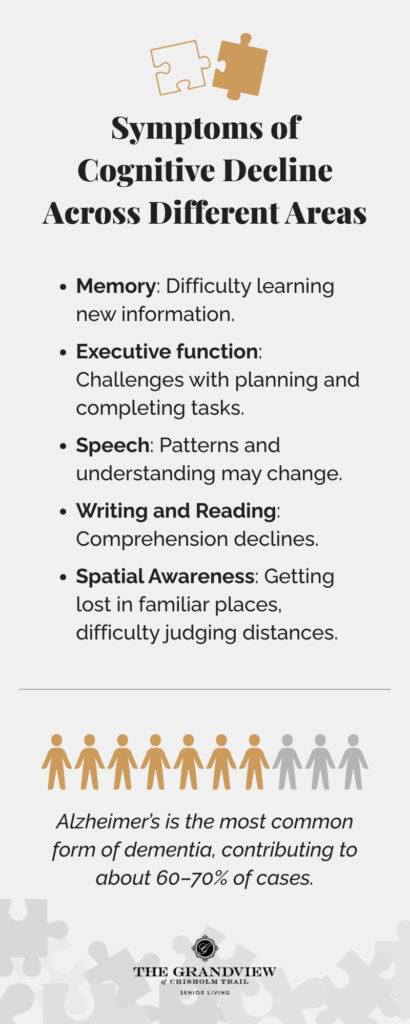
Signs of Cognitive Decline | The Grandview of Chisholm Trail Senior Living - Infographic

Key Symptoms of Cognitive Decline Across Different Areas

The symptoms of cognitive decline affect multiple aspects of mental functioning.

  • Memory symptoms include difficulty learning new information, forgetting important personal details, and losing track of familiar locations or routes.
  • Executive function problems create challenges with planning, organizing, and completing tasks. A loved one may struggle to manage finances, prepare meals, or maintain their household effectively.
  • Speech patterns may change, vocabulary becomes limited, and understanding complex conversations grows increasingly difficult.
  • Writing and reading comprehension decline simultaneously, affecting independence and social connections.
  • Spatial awareness problems emerge as cognitive function decreases. These symptoms include getting lost in familiar places, difficulty judging distances, or trouble with coordination.

Signs of Cognitive Impairment Versus Normal Aging

We can compare some of the symptoms of cognitive deficits to typical age-related changes. Normal aging involves occasional memory lapses that don’t interfere with daily functioning, while cognitive impairment creates consistent patterns of difficulty that impact independence and quality of life.

Mild cognitive impairment (MCI) is an intermediate stage between normal aging and dementia, where individuals experience noticeable cognitive changes exceeding expected age-related decline but don’t meet dementia criteria.

The distinction between cognitive impairment and normal aging lies in severity and consistency of symptoms. MCI symptoms include persistent memory problems, difficulty with daily tasks, and subtle reasoning changes, though individuals maintain independence in most daily activities. Cognitive impairment symptoms occur regularly and progressively worsen over time, while normal aging involves sporadic, minor memory lapses that don’t significantly impact daily life.

The Characteristics of Dementia Subtypes

Dementia encompasses various subtypes with distinct characteristics. According to the World Health Organization, Alzheimer’s is the most common form of dementia, contributing to about 60–70% of cases. Below, our experts at Grandview of Chisholm Trail Senior Living explain the most common dementia subtypes.

  • Alzheimer’s is caused by protein buildup in the brain. It begins with mild memory loss and gradually affects thinking, reasoning, and daily functioning.
  • Vascular dementia results from reduced blood flow to the brain, often following strokes or cardiovascular disease. This type typically affects executive function, planning abilities, and processing speed more than memory initially.
  • Lewy body dementia combines cognitive decline with movement disorders and visual hallucinations. Fluctuating attention and alertness characterize this subtype, creating marked unpredictability.
  • Frontotemporal dementia affects personality, behavior, and language before impacting memory. This type often strikes younger individuals and creates dramatic personality changes that challenge families emotionally.

What Causes Cognitive Decline and Risk Factors

Cognitive decline results from aging, genetics, cardiovascular issues, diabetes, and lifestyle choices. Major risk factors include family history, high blood pressure, smoking, physical inactivity, poor diet, social isolation, and limited mental stimulation. Brain injuries, certain medications, and chronic conditions like depression also contribute.

While some factors remain uncontrollable, maintaining heart health, staying physically active, engaging socially, and pursuing lifelong learning can help reduce risk and slow progression.

Frequently Asked Questions About Cognitive Decline

Some forms advance slowly over many years, while others progress within months. Early intervention and proper medical care can help slow the progression in many cases.

Doctors can treat some cases of cognitive decline, but not all are reversible. Medication side effects, depression, vitamin deficiencies, and thyroid problems can cause reversible cognitive symptoms; healthy lifestyle choices may help prevent or delay the onset in some individuals.

Nursing homes suit residents with one or more chronic health conditions, like debilitating arthritis or ALS. Seniors with dementia are also welcomed in those settings, but The Cottage at The Grandview of Chisholm Trail offers targeted care and therapeutic programming.

Bringing It All Together

In conclusion, recognizing early warning signs, professional evaluation, and appropriate interventions can significantly impact the quality of your loved one’s outcomes. And while cognitive changes present challenges, proper support and specialized care preserve dignity and comfort throughout the journey.

Trust The Grandview of Chisholm Trail Senior Living for Specialized Memory Care

Feel free to contact our community if you’re worried about a loved one’s signs of cognitive decline. We can explain your options and provide your loved one with compassionate, expert care during this challenging time. Our trained caregivers work with dementia residents every day and treat them with loving kindness.

Contact Us to Learn More About Our Community

The information presented on or through the website is made available solely for general information purposes. We do not warrant the accuracy, completeness, or usefulness of this information. Any reliance you place on such information is strictly at your own risk. The information contained herein does not constitute the giving of medical, health, or fitness advice. Users of the website must consult their physicians regarding the applicability of any opinions or recommendations with respect to their conditions. We disclaim all liability and responsibility arising from any reliance placed on such materials by you or any other visitor to the website, or by anyone who may be informed of any of its contents.

This website uses cookies.