
At The Bluffs of Flagstaff in Flagstaff, Arizona, we understand that families often search for natural and supportive ways to help their loved ones living with dementia. One common question many ask is: Does exercise help dementia? The short answer is yes — exercise can play a valuable role in supporting both physical health and cognitive well-being.
How Exercise Supports Brain Health
Research shows that physical activity does more than strengthen the body; it can also benefit the mind. For seniors living with dementia, regular exercise has been linked to improved memory, mood, and daily function. When asking if exercise can slow down dementia, studies suggest that it may indeed help delay certain symptoms.
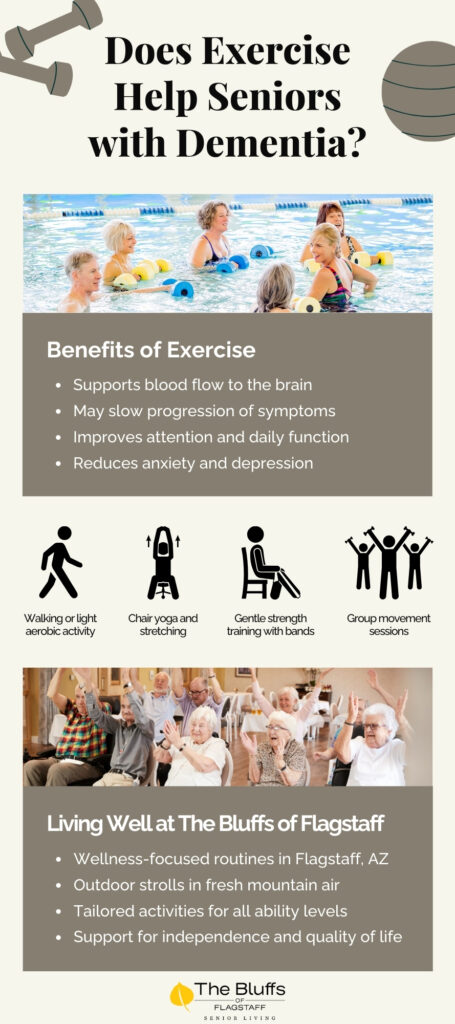
Some key benefits include:
- Improved blood flow to the brain
- Reduced inflammation
- Release of hormones that support nerve growth
- Better sleep patterns
Together, these factors may help preserve cognitive health and support overall quality of life.

Can Exercise Improve Cognitive Symptoms of Alzheimer’s?
Families often wonder: Can exercise improve cognitive symptoms of Alzheimer’s disease? While there is no cure, consistent movement may slow progression and ease some daily challenges. Exercise for individuals with dementia and Alzheimer’s has been shown to:
- Improve attention span
- Support problem-solving abilities
- Reduce restlessness
- Decrease symptoms of anxiety and depression
Even small amounts of movement, such as daily walks or chair exercises, may make a difference. Gentle stretching, balance routines, and low-impact aerobic activity are all helpful options. Just as the body benefits from movement, so too do emotions and daily living skills.
Exercise Helping Dementia Care Residents Through Daily Living Skills
Beyond brain health, exercise for those with dementia also supports independence in daily routines. Movement can help seniors maintain their strength, flexibility, and coordination — abilities that are essential for dressing, bathing, and eating.
Ways exercise helps with daily living include:
- Increased muscle strength for walking and standing
- Better balance to reduce fall risks
- Improved flexibility for easier movement
- Boosted confidence during daily activities
Because every person’s journey is different, tailoring exercise to each individual becomes key.
Practical Ideas for Seniors in Flagstaff
At The Bluffs of Flagstaff, we encourage approachable and safe forms of movement. Our beautiful location in Flagstaff, Arizona, provides the perfect setting for outdoor strolls and fresh air, which further benefits mood and overall health.
Some practical exercise ideas include:
- Short neighborhood walks
- Chair yoga
- Light resistance training with bands
- Gentle group stretching sessions
Each activity can be adapted to match the comfort and abilities of the individual.
FAQ: Exercise and Dementia
Can exercise slow down dementia?
While exercise cannot stop dementia, it may help manage symptoms.
How often should seniors with dementia exercise?
Most experts suggest light to moderate exercise for 20–30 minutes, several times a week.
What types of exercise are best?
Walking, stretching, yoga, and light strength training are excellent choices.
Is exercise safe for all seniors with dementia?
Most forms of gentle exercise are safe, but always consult with a health care provider before starting a new routine.
Final Thoughts About Exercise and Dementia
In conclusion, when asking, Does exercise help dementia?, evidence suggests that consistent movement can support both physical and cognitive health. The most important takeaway is this: While exercise cannot cure dementia, it may slow symptoms, improve daily function, and enhance quality of life. Movement remains an important part of overall wellness.
Take the Next Step with The Bluffs of Flagstaff
At The Bluffs of Flagstaff in Flagstaff, Arizona, our community supports wellness through movement, connection, and individualized care. Our team would be glad to share how exercise is incorporated into daily living and how it may support seniors experiencing dementia or Alzheimer’s. Reach out today to schedule a tour or connect with a member of our team for more information.